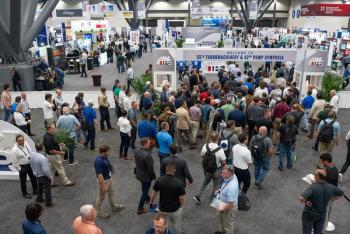
At the 2026 Turbomachinery and Pump Symposia, Opportune’s Dan Romito warned that grid constraints and a five-year gas turbine backlog are pushing AI data centers toward on-site power, while colleagues honored the legacy of the late Dara Childs.
CO2-induced corrosion is common in Brazil’s pre-salt fields, where Petrobras reinjects CO2 from its production operations into wells to decrease flaring and boost oil recovery.
Baker Hughes and Petrobras have established a collaborative technology program to develop and test next-generation flexible pipe systems to address stress corrosion cracking due to CO2 (SCC-CO2). The pre-commercial agreement will be executed at Baker Hughes’ Energy Technology Innovation Center and local flexible pipe systems manufacturing plant in Rio de Janeiro, Brazil.
The partnership also includes a purchase option for the new next-generation flexible pipes, which will have a 30-year extended service life when operating in high-CO2 environments. Baker Hughes’ flexible pipe systems and advanced monitoring technologies have already shown a reduced impact of SCC-CO2 in the field, and the company will continue to provide these solutions for Petrobras to utilize in Brazil’s offshore oil and gas fields.
SCC-CO2 Background
In 2016, SCC-CO2 was identified and found to affect flexible pipes in pre-salt fields with high, naturally occurring CO2 concentrations. Prior to this collaboration, operators in high-CO2 environments could only mitigate impacts, which significantly reduced riser and flowline service life.
“Baker Hughes has led the way in addressing SCC-CO2, and we will bring that expertise and experience to bear in developing the definitive solution to this critical industry challenge,” said Amerino Gatti, Executive Vice President, Oilfield Services & Equipment at Baker Hughes. “By deploying flexible pipe systems that last for decades, Petrobras can more efficiently unlock the vital natural resources that power the region, while also safely returning CO2 deep underground.”
Upon water entering the pipe’s annulus area, the steel reinforcement layers may be corroded and reduce the system’s lifespan/structural integrity. CO2-induced corrosion is common in Brazil’s pre-salt fields, where Petrobras is reinjecting it from their production operations into wells to reduce flaring and enhance oil recovery. Petrobras intends to limit atmospheric emissions, and carbon capture, utilization and storage is required for this goal.
More Baker Hughes News
Last week, Baker Hughes agreed to provide
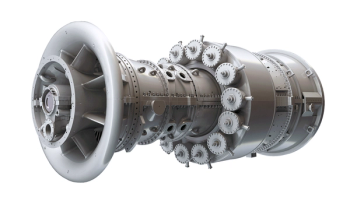
The NovaLT gas turbine will provide data center customers with the flexibility to adapt and meet their specific, reliable, and sustainable power requirements. It can start-up quickly and burn multiple fuels, such as natural gas, hydrogen-natural gas blends, and 100% hydrogen. In addition to powering hyper-scaled data centers with turbine technology, Baker Hughes can use geothermal, cogeneration, and the
And in January 2025, Baker Hughes recently launched a downhole fiber-optic wet-mate system called
The system has been tested and proven across numerous situations/environments, such as extended reach or complex wells, subsea operations, and completion methods like gravel packs, frac packs, and standalone screens.