

Industry leaders converged as the 2026 event kicked off with a keynote address that put global energy investment, supply challenges, and the evolving offshore technology landscape in focus.
Industry leaders converged as the 2026 event kicked off with a keynote address that put global energy investment, supply challenges, and the evolving offshore technology landscape in focus.

U.S. policy leaders signaled accelerating LNG, coal, and nuclear actions while interest in hydrogen, carbon capture, and offshore wind cooled amid affordability concerns.
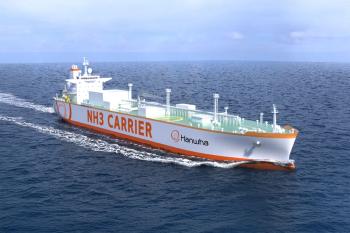
Due to ammonia’s high flame temperature, the combustion system must leverage an appropriate thermal barrier coating system to protect its nickel-based metal alloy hardware.
Reciprocating units have higher maintenance requirements and low power density, necessitating a Baker Hughes and PSM partnership to develop low-carbon gas turbine propulsion.
Remote monitoring delivers comprehensive plant control/overview, but Tegtmeier says that it shouldn’t replace standard operating procedures, equipment criticality, and other fundamentals.
The Alternative Technology Demonstration and Research Program obtains data from propane-fired combined heat and power installations and commercial facilities in the United States.
The company installed its own ammonia vaporization system at the German Aerospace Center to enable partial- and full-load testing, helping to validate the new combustor’s architecture.
Daniel Tegtmeier, Director of EthosEnergy’s Performance Center, says that the energy transition shifted its focus from decarbonization and renewables to extending current assets.
The Propane Education & Research Council said that propane’s speed-to-power, extensive infrastructure, and readily available power equipment makes it a prime first-energy choice.
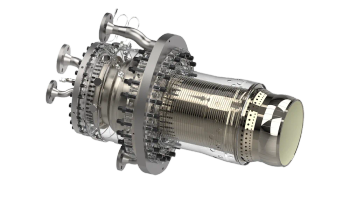
The company’s aftermarket combustor technology, FlameSheet and the MicroMixer, successfully demonstrated low NOx emissions and reliable flame stabilization with cracked ammonia.
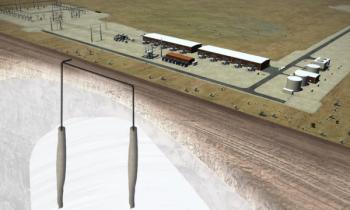
The ACES Delta project uses hydrogen production, salt cavern storage, and gas turbines to deliver dispatchable power to California while supporting long-term decarbonization goals.
At POWERGEN International 2026, EPRI’s Stephen Storm covers several proactive approaches to manage flexible operations and performance for gas turbine-driven thermal plants.
The keynote highlighted how data center growth, rising electricity loads, and infrastructure constraints are accelerating changes across generation, transmission, and resource planning.
The 2025 Turbomachinery & Pump Symposia covered hydrogen compressor testing, new gas seal technology, various pumps for ammonia and supercritical operations, and more.
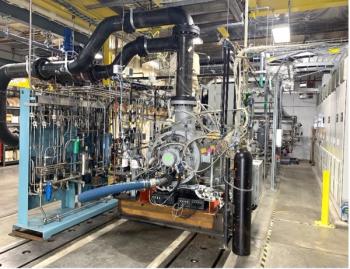
The company’s compressor testing suggested that single-piece rotor manufacturing enables higher tip speeds, which maintains an optimal pressure ratio for compressing hydrogen.
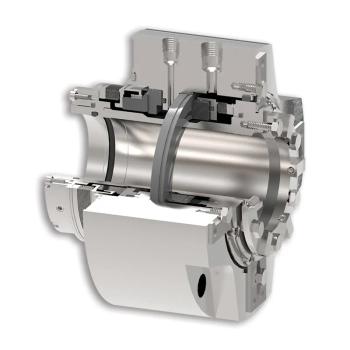
The non-contacting, gas-lubricated seal offers simplicity of maintenance, reduced downtime, and significantly minimized power consumption—up to 90 – 95% less usage.
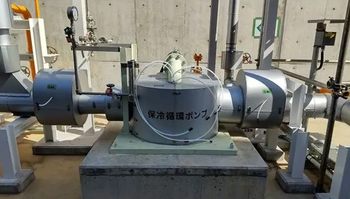
Mechanically sealed pumps are subject to cavitation damage, thermal shock, and more when operating with ammonia, so operators deploy sealless designs to counter corrosive effects.
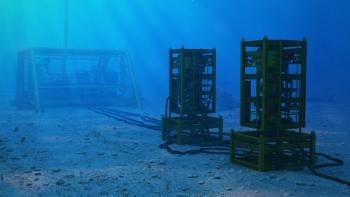
With some mechanical and hydraulic modifications, conventional centrifugal pumps can handle supercritical fluids better than most centrifugal compressor designs.
For mechanical testing, the compressor met API’s allowable vibration limit and performance guarantees, validating the design for high-speed applications.
Although hydrogen projects have slowed down since the Trump Administration took office, Siemens Energy will continue technology demonstrations to ensure future-fuel readiness.
The 2025 Turbomachinery & Pump Symposia provides participants with up-to-date information on the latest technologies, including supercritical equipment, hydrogen systems, and AI.
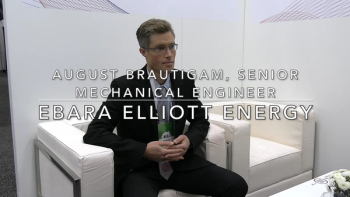
While canned motor pumps are suitable for high-pressure ammonia applications, magnetically coupled pumps are typically deployed for higher flow, lower pressure services.
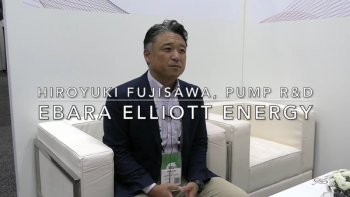
Sealless ammonia pumps ensure safety for nearby personnel by containing leakage and managing the fuel’s inherent toxicity, flammability, and pungent odor.

Dr. Eric Petersen, Director of the Texas A&M Turbomachinery Lab, discusses a focus on centrifugal compressors, vibration and reliability, and new short courses at TPS 2025.
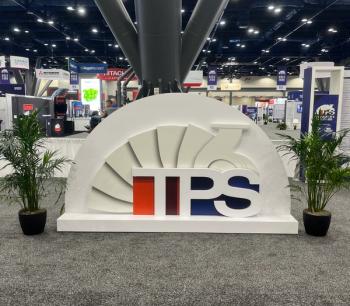
Facing rising demand, decarbonization targets, and supply chain volatility, John Crane’s Nico Schmaeling urged turbomachinery professionals at the 2025 Turbomachinery & Pump Symposium to address the energy trilemma—security, affordability, and sustainability—through smarter design, efficiency upgrades, and cross-industry collaboration.
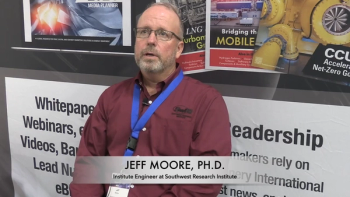
Jeff Moore of SwRI and the STEP Demo team reports 4 MWe net power from 10 MWe sCO₂ turbine; testing confirms low vibration, stable bearings, and scale-up potential.
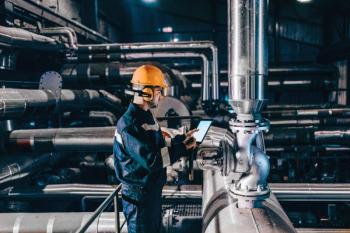
Industry leaders discuss strategies—collaborating with academia, partners, and networking—to cultivate a skilled workforce and address labor challenges.
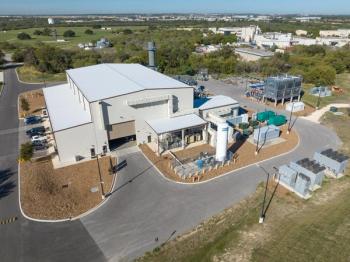
Jeff Moore of SwRI highlights the successful testing of a 10 MWe sCO2 turbine in simple-cycle configuration, initially achieving over 8 MW of gross shaft power and 4 MWe net electric output when synchronized to the grid.
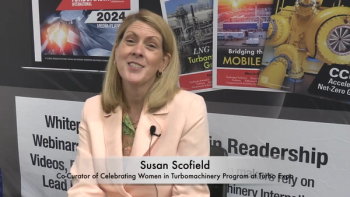
At Turbo Expo 2025, Susan Scofield of Siemens Energy says great role models, mentoring programs, and building networks support women in turbomachinery.
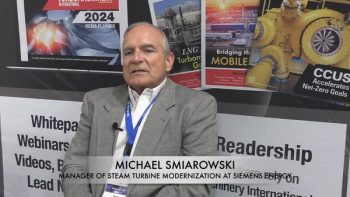
Michael Smiarowski of Siemens Energy says the steam turbine market is managing unprecedented demand, so advanced implementation planning is key.