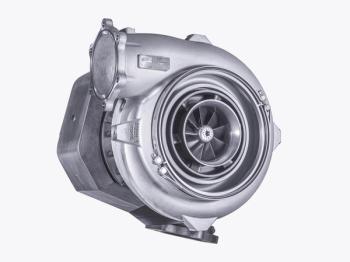
Accelleron's H1 2026 revenue rose 21% as data center prime power turbocharger deliveries doubled to 5 GW, prompting a raised full-year outlook.
One session of the 7EA User Conference dealt with generator reliability. The factors affecting reliability include the unique characteristics of each machine, its age/condition, history, operational and operator actions (cycling, loading, trips, restarts, synchronous condensing, motoring and so on), environment, external events and acts of god. The smart policy is to form a maintenance plan and carry it out systematically.
Another aspect for users to consider is the fact that generators have changed dramatically over the last 30 years. The insulation has shifted from asphalt to polymer, they produce more power in a smaller footprint, are cycled more often and the coil is configured differently. This has brought about different generator behavior -- asphalt expanded with heat, for example, whereas polymers gradually shrink -- this one factor can cause several maintenance headaches.
Some users have found value in Reliability Centered Maintenance (RCM). Not all aspects might apply but there are some worth implementing. For instance, many users only consider one failure pattern -- years of dependable service followed by the onset of deterioration and end of life. RCM, on the other hand, describes six possible patterns of failure including the Bell Pattern i.e. some early failures followed by a long period of reliability then late in the cycle, increasing failures.
The rest of the session called attention to the basics: know your machine -- how many MW, what OEM and what are its basic characteristics? Harness online monitoring of temperature, vibration and other parameters. Keep your own records -- if only the OEM has the data on your equipment, there is no one else to go to except that OEM. If others have access to the data, they can help and may be more responsive and/or cost effective. Outage report, for example, should go into a binder to avoid the documents getting scattered throughout a file system or office.
Inspection and trending, too, were considered of high importance. If data is being gathered, it is of far more value if it is trended. Instead of knowing what happened, trending highlights possible future events and concerns. But that doesn't eliminate the need to look.
On the education side, there are various places that users can go to find out about their machines such as vendors, manuals, instruction book, past outage reports, trended information, user groups, technical papers, conferences, IEEE and websites such as