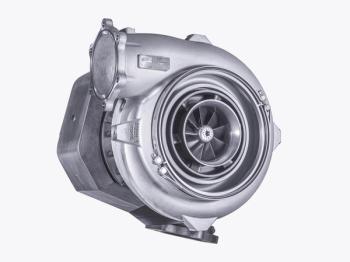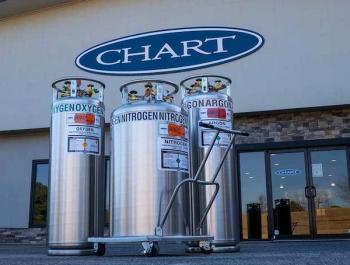
Ebara Elliott Energy enters liquid hydrogen aviation refueling, supplying a cryogenic pump for Chart Ferox’s GOLIAT trailer ahead of 2028 high-flow testing.
Until now, it has been difficult for engineers to predict whether a hybrid bearing will outperform a steel one in a given application, or whether the possible performance benefits that hybrid bearings enable are worth the extra investment they require. The conventional equations engineers use to calculate the rating life of a bearing do not reflect the real-world performance of hybrid designs.
To rectify this issue, in 2012 engineers at SKF started to develop what would become Generalized Bearing Life Model, or GBLM. A primary version of the model was presented at the Hannover Messe in 2015, but at this stage the model was not ready yet to perform calculations for hybrid bearings. Four additional years were needed by scientists and technicians at SKF’s facilities in the Netherlands and Austria to incorporate this feature into GBLM.
Using GBLM, SKF engineers have been able to determine the real-world benefits hybrid bearings can have. In the case of a poorly lubricated pump bearing, for instance, the rating life of a hybrid bearing can be up to eight times that of a steel equivalent. For a screw compressor bearing running with contaminated lubricant, meanwhile, the hybrid offers a rating lifetime a hundred times greater than a conventional steel bearing.