

News|Articles|January 29, 2026
Baker Hughes Provides Compression, Injection Tech for Clean Ammonia Plant
Author(s)James Cook
Listen
0:00 / 0:00
Key Takeaways
- Baker Hughes will deliver compression and well construction solutions for Wabash Valley Resources' low-carbon ammonia plant, supporting hydrogen production and CO2 sequestration.
- The Indiana plant will produce 500,000 tons of ammonia annually, capturing 1.67 million tons of CO2, enhancing the U.S. fertilizer supply chain.
The equipment will support Honeywell’s hydrogen purification system, ammonia processing, and syngas processing, addressing multiple stages of the clean ammonia value chain.
Advertisement
Per multiple contracts, Baker Hughes will deliver essential compression and integrated well construction solutions for Wabash Valley Resources’ (WVR)
The company will supply compression equipment for Honeywell UOP’s hydrogen purification system, in addition to compressors for ammonia and syngas processing under a separate contract with a different customer. Also, Baker Hughes will provide CO2 injection pumps for permanent geological storage. These awards were announced during the 2026 Baker Hughes Annual Meeting in Florence, Italy.
“Baker Hughes is a critical sustainability partner for Wabash Valley Resources, providing the technologies that allow us to both open new low-carbon markets and make existing agricultural supply chains more sustainable,” said Dan Williams, CEO of Wabash Valley Resources. “Their expertise in well construction, monitoring, and long-term CO2 management enables us to deliver low-carbon ammonia at industrial scale and strengthen America’s fertilizer supply chain.”
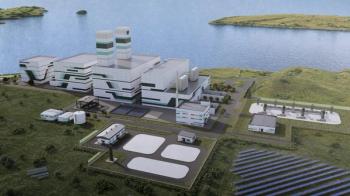
WVR’s project will convert an existing gasification facility into a modern clean ammonia plant and, once in operation, it will produce 500,000 tons of ammonia per year while capturing 1.67 million tons of CO2 annually. Its ammonia production, coupled with carbon capture and storage, will create a more sustainable and reliable domestic fertilizer supply for the U.S. Corn Belt and wider agricultural market.
“Beyond energy, Baker Hughes is helping to transform essential industries such as agriculture to help them expand in a more productive and sustainable manner,” said Lorenzo Simonelli, Baker Hughes Chairman and CEO. “Wabash Valley Resources’ project brings together government, technology partners, industry, and global investors to realize industrial innovation so that farms can provide for growing populations.”
In Q3 2025, Baker Hughes secured a separate well construction contract to support the site’s long-term CO2 infrastructure. The
Liquefaction in Louisiana
In December 2025, Technip Energies granted Baker Hughes full notice to proceed to deliver
In addition to delivering centrifugal compressors and LM9000 aeroderivative gas turbines, the full delivery scope includes commissioning services, capital spares, extended warranty, and a full string test. The LM9000 model is among the most efficient gas turbines within its 70+ MW power class, providing over 44% efficiency in ISO conditions with extended time-between-maintenance intervals. Its compact packaging enables simplified maintenance, longer service intervals, high availability, and quicker installation and commissioning.
Advertisement
Related Content
Advertisement



Advertisement
Advertisement