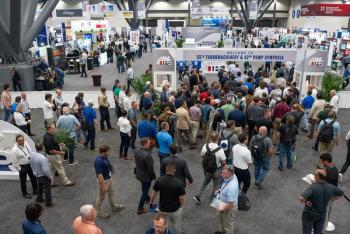
At the 2026 Turbomachinery and Pump Symposia, Opportune’s Dan Romito warned that grid constraints and a five-year gas turbine backlog are pushing AI data centers toward on-site power, while colleagues honored the legacy of the late Dara Childs.
The electrical upgrade will increase oxygen capacity by 10% and immediately reduce CO2 emissions by 224,000 tons per year, furthering China’s industrial decarbonization goals.
Per a contract extension with Yanchang Petroleum Group, Air Liquide will invest approximately €25 million to revamp its
The total annual CO2 emissions reduction will reach 550,000 tons per year, primarily by leveraging low-carbon energy sourcing throughout the plant’s lifecycle. The electricity-powered production unit is expected to commence operation by year-end 2027. Before then, Air Liquide will continue to execute services and supply gas to the Yanchang Group’s subsidiary, Kaiyue.
“We are thankful for the continued trust from Yanchang Petroleum Group, a valued partner for almost two decades,” said Ronnie Chalmers, Air Liquide Group Vice President, Asia Pacific. “This investment underscores Air Liquide's commitment to grow and reduce the carbon emissions of its operations while contributing to its customers' decarbonization journey with tailored solutions. The shift towards reducing carbon emissions is an ongoing movement in China, and our company is proud to be actively supporting it while managing to grow.”
The contract was signed in Beijing during Emmanuel Macron’s visit, contributing to China’s 2030/2060 carbon peaking and carbon neutrality goals, respectively. This project reflects Air Liquide’s global decarbonization strategy, as the company previously electrified two oxygen facilities in Tianjin. In 2008, Air Liquide began a long-term partnership with the Yanchang Group by supplying gas to Kaiyue.
In mid-November 2025, Air Liquide successfully kickstarted the world’s first
The company’s proprietary ammonia cracking technology benefitted from several key enhancements across multiple critical areas, including process safety, material testing, advanced catalysis for ammonia cracking, ammonia combustion, and efficient molecule separation. This successful operation demonstrates Air Liquide’s ability to upscale technologies from laboratory research to industrial applications, developing first-of-its-kind solutions for customers.
Currently, a well-established global infrastructure exists for the large-scale production, transportation, and utilization of ammonia. This enables ammonia exports from energy-abundant regions to end-users around the world, where it can then be cracked back into hydrogen to help decarbonize industry and mobility. Air Liquide’s industrial-scale pilot plant is supported by the Flemish Government through VLAIO—the Flemish Agency for Innovation and Entrepreneurship.
In late November 2024, Air Liquide announced that it will construct, own, and operate a renewable hydrogen production project with an annual capacity of 25,000 tons at TotalEnergies’