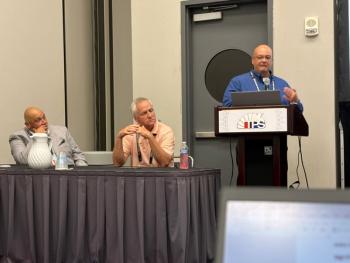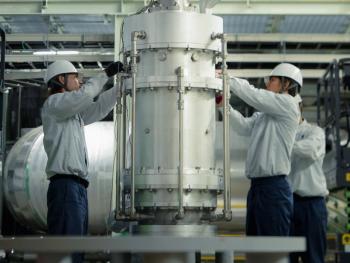
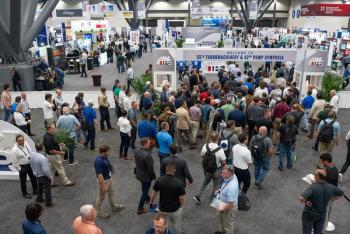
At the 2026 Turbomachinery and Pump Symposia, Engro Fertilizers’ Muhammad Uzair Javed explained how his team traced persistent high vibration to train misalignment, then moved a 100-ton turbine skid to cut vibration in half.
The company’s coiled-tube drilling operations include its CoilTrak bottomhole assembly system and enhanced reservoir analysis driven by the GaffneyCline energy advisory.
In Q3 2025, Aramco awarded Baker Hughes a contract to expand its integrated underbalanced coiled-tubing drilling (
Baker Hughes’ UBCTD operations leverage its CoilTrak bottomhole assembly system and enhanced reservoir analysis, both driven by the GaffneyCline energy advisory. Combining technology and insight allows operators to effectively navigate the subsurface environment during horizontal drilling and re-entry operations. Work under the expanded agreement will begin in 2026.
“This project is the result of nearly two decades of successful collaboration between Baker Hughes and Aramco, which have set the standard for UBCTD,” said Amerino Gatti, Executive Vice President of Oilfield Services & Equipment, Baker Hughes. “By combining technologies with an integrated approach, we can support Aramco to more efficiently access bypassed and hard-to-reach hydrocarbons and produce the resources to help the Kingdom. This expansion sets the stage for further advancements in UBCTD, which has the potential to shape how oil and gas are produced around the world.”
These solutions, combined with project management services, enable Baker Hughes to improve production efficiency, speed, and safety while minimizing reservoir damage when compared to traditional development methods. The multi-year agreement builds upon Baker Hughes’ Saudi Arabian track record since entering the UBCTD market in 2008.
In May 2025, Baker Hughes launched an advanced flame-detection technology to prevent damage, hazards, or explosions within gas turbines:
Like other flame sensors, the new model is intended to ensure safe combustion and overall gas turbine operation by identifying lost or unstable flames. Upon positive detection, Flame Tracker ILG triggers a shutdown command that:
Baker Hughes’ updated safety-oriented technology supports the role of fuel flexibility in the energy transition. As natural gas-hydrogen blends become more common to provide secure and low-emissions power generation, the Flame Tracker ILG will ensure safe operation and prevent unexpected damage to gas turbines. The new system was developed at Baker Hughes’ Reuter-Stokes facility in Twinsburg, OH.
In late August 2025, Baker Hughes obtained a