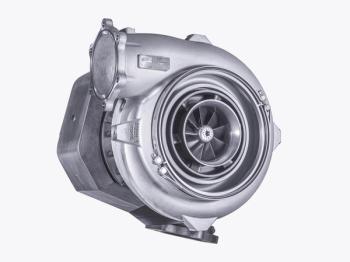
Accelleron's H1 2026 revenue rose 21% as data center prime power turbocharger deliveries doubled to 5 GW, prompting a raised full-year outlook.
Existing platform and subsea equipment designs will drive cost efficiencies across the Kaskida hub’s construction, commissioning, and operations.
bp announced a final investment decision (FID) for its sixth crude oil hub in the U.S. Gulf of Mexico—the Kaskida project. It’s located in Keathley Canyon, approximately 250 miles southwest of New Orleans. The project unlocks the future development of discovered resources equivalent to 10 billion barrels across the Kaskida and Tiber catchment areas.
“Developing Kaskida will establish the potential of the Paleogene in the Gulf of Mexico for bp, building on our decades of experience in the region,” said Gordon Birrell, Executive Vice President of Production & Operations, bp. “Technology has and will continue to play a pivotal role in propelling Kaskida from discovery to production. Today is a critical step in realizing its potential.”
The Kaskida field contains proven recoverable resources estimated at approximately 275 million barrels of oil equivalent in Phase 1. Additional wells, subject to further evaluation, may be drilled in future phases. It will feature a new floating production platform with a six-well capacity, producing 80,000 barrels of crude oil per day in Phase 1. Production is scheduled for 2029.
“By employing an industry-led design solution, Kaskida will be simpler to construct and simpler to operate, enhancing safety and delivering greater value for bp,” said Andy Krieger, bp’s Senior Vice President, Gulf of Mexico and Canada.
bp will utilize replicable existing platform and subsea equipment designs to bolster cost-efficiencies for Kaskida’s construction, commissioning, and operations. Kaskida reservoir production requires well equipment rated up to 20,000 psi. High-pressure drilling technology and seismic imaging allows bp to safely develop Kaskida and Tiber, which may receive FID in 2025.
Other BP News
In April 2024,
The platform’s engineering automates labor-intensive processes for safer and more efficient operations. It also has a fully automated drilling rig that helps to lower operational emissions alongside non-drilling automated processes. Extracted oil will be transported through processing facilities on the platform and then exported approximately 130 km to the onshore Sangachai terminal. The export process will use a new in-field pipeline connected to an existing 30-inch subsea export line.
In June,
The FPSO was constructed at the COSCO Qidong Shipyard in China and is expected to process over 500 million standard cubic feet of gas per day. It will separate water, condensate, and impurities from the gas prior to transportation via pipeline to a floating LNG vessel at the Hub Terminal approximately 10 km off the coast.