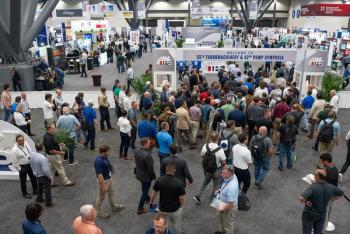
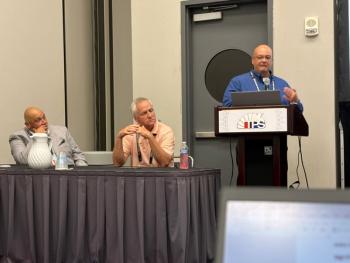
At the 2026 Turbomachinery and Pump Symposia, John Crane’s Brian Kalfrin explained why volatile natural gas liquids demand custom-engineered seals, from face material selection to installation and flush rates.
The system will ensure stable natural gas transportation through Brazil’s pipeline network, leveraging on-site power reliability to strengthen energy security for downstream customers.
Capstone Green Energy and Fluxo Soluções Integradas, the company’s authorized Brazilian distributor, will deliver one
“This project underscores the importance of reliable on-site power for critical energy infrastructure,” said Vince Canino, President and CEO of Capstone Green Energy. “The C1000 Signature Series microturbine is engineered for high uptime in demanding, remote environments. We’re proud to be part of a solution that strengthens Brazil’s energy infrastructure with dependable, clean power and low maintenance.”
The customer’s large-scale compression facility is essential for maintaining gas flow across regions facing resiliency challenges, where power losses may disrupt natural gas availability for consumers. Capstone’s C1000S delivers 1 MW of reliable, ultra-low-emission power and operates continuously with minimal service requirements. The modular design enables scalability, redundancy, and integration into complex industrial operations.
Generating critical, continuous power to support compression operations will ensure stable natural gas transportation through Brazil’s pipeline network. Improving on-site power reliability bolsters energy security for downstream customers and supports the resilience of regional Brazilian infrastructure. The deployment continues Capstone’s expansion in Latin America and its goal to improve resilience, reduce emissions, and lower operational risk in remote operating environments.
“Initial engagement began when the customer’s maintenance team visited gas facilities in Bolivia and saw Capstone microturbines operating reliably in demanding environments,” said Rafael Amarante, Product Manager for Fluxo. “Following technical evaluations and through continued collaboration with the customer’s engineering team, Capstone’s technology demonstrated advantages over traditional reciprocating engines, including lower maintenance requirements, high reliability with a single moving part, and the flexibility of the C1000S modular design.”
Capstone Green Energy’s microturbines are commonly used for on-site power generation across oil and gas, mining, utilities, and industrial manufacturing applications, with newer solutions designed for emerging data center operations. Its behind-the-meter clean energy solutions are also available for commercial operations.
In early January 2025, Capstone Green Energy and its subsidiaries successfully installed its 6.6-MW combined heat and power (CHP) microturbine system at a
Microturbines will fire biogas produced via hog manure, which is converted through proprietary pyrolysis reactors. The system’s clean exhaust heat will be captured and used to heat thermal oil, offering the temperature control required for pyrolysis reactors in the biogas production process. This closed-loop design maximizes energy efficiency, cuts waste, and supports continuous renewable fuel generation. Also, the system improves operational efficiency by delivering high-value thermal energy throughout the facility. Its integrated model enhances project economics, increases energy efficiency, and offers a scalable model for continuous renewable power generation.