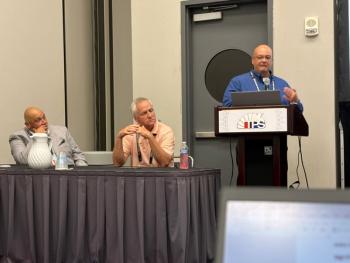
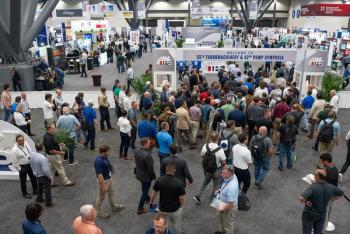
At the 2026 Turbomachinery and Pump Symposia, Opportune’s Dan Romito warned that grid constraints and a five-year gas turbine backlog are pushing AI data centers toward on-site power, while colleagues honored the legacy of the late Dara Childs.
The system’s combined heat and power configuration supports a pyrolysis thermochemical reaction, which converts swine waste into biogas in a closed-loop design.
Capstone Green Energy and its subsidiaries successfully installed its 6.6-MW combined heat and power (CHP) microturbine system at a
Microturbines will fire biogas produced via hog manure, which is converted through proprietary pyrolysis reactors. The system’s clean exhaust heat will be captured and used to heat thermal oil, offering the temperature control required for pyrolysis reactors in the biogas production process. This closed-loop design maximizes energy efficiency, cuts waste, and supports continuous renewable fuel generation.
“The project represents a significant shift in agricultural waste management,” said Vince Canino, President and CEO, Capstone Green Energy. “By utilizing pyrolysis, a thermochemical decomposition process, the facility transforms organic swine waste into a clean-burning biogas. Our Signature Series microturbines are engineered to handle a wide operating window, along with variable compositions of renewable biogas—providing a resilient and low-emission alternative to traditional reciprocating engines. By converting agricultural waste into renewable power and capturing microturbine waste heat for productive use, we create a circular economy that delivers value to the surrounding community.”
Also, the system improves operational efficiency by delivering high-value thermal energy throughout the facility. Its integrated model enhances project economics, increases energy efficiency, and offers a scalable model for continuous renewable power generation. Additionally, the project serves a broader community purpose: an effective odor-control solution that reduces environmental impacts. Generating renewable electricity allows the project to obtain carbon emission reduction credits.
Combining advanced pyrolysis with microturbine technology provides a circular energy model and, unlike typical combustion, this approach:
“Projects like this show how distributed generation can provide operational and environmental value,” said Jeff Beiter, Founder and CEO of E-Finity Distributed Generation. “By converting agricultural waste into renewable power and usable heat, the system supports odor control, improves efficiency, and enables the generation of carbon emission reduction credits, helping align economic performance with ESG goals.”
The project was secured by E-Finity Distributed Generation, Capstone’s distributor for the Mid-Atlantic, Southern United States, and the Caribbean region.
In mid-December 2025, Capstone Green Energy and its distributor, DTC Machinery, agreed to supply a
The customer distributes a pepper-focused product line across the United States and Mexico, and was seeking a reliable, efficient solution to meet the growing energy demands and sustainability goals of its manufacturing processes. The C800S will provide clean exhaust heat in a CHP configuration, using it to preheat boiler water and supply consistent thermal energy for cooking processes.