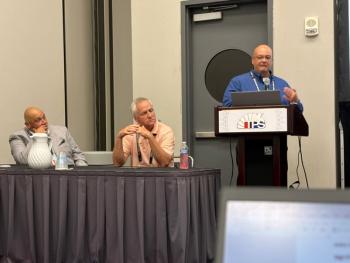
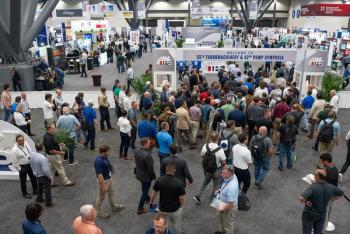
At the 2026 Turbomachinery and Pump Symposia, Opportune’s Dan Romito warned that grid constraints and a five-year gas turbine backlog are pushing AI data centers toward on-site power, while colleagues honored the legacy of the late Dara Childs.
The next-gen engine features two stages of variable stator vanes, cooled high-pressure turbine blades, and additively manufactured components.
The United States’ Federal Aviation Administration (FAA), during the Federal Aviation Regulation (FAR) Part 33 certification process, certified GE Aerospace’s Catalyst turboprop engine. The FAR program evaluated more than 23 test engines and conducted over 190 component tests, with the Catalyst engine completing approximately 8,000 operating hours to satisfy performance targets.
“The certification of the Catalyst engine is a significant milestone for our company and a proud moment for all our team members who have dedicated their efforts to the design, development, and testing of this brand-new European turboprop engine,” said Riccardo Procacci, President and CEO, Propulsion and Additive Technologies at GE Aerospace. “We are now fully committed to supporting the production ramp-up of the engine towards the entry into service in support of our customers.”
Catalyst Turboprop Engine
The Catalyst turboprop engine is the first centerline, clean-sheet advanced turboprop to be certified under the latest FAA standards, which include more than 20 new requirements. The engine features a 16:1 overall pressure ratio, allowing up to 18% improved fuel consumption and up to 10% higher cruise power. The next-generation engine features two stages of variable stator vanes, cooled high-pressure turbine blades, and additively manufactured components.
“Catalyst has been through a rigorous certification and testing process,” said Paul Corkery, Catalyst General Manager at Avio Aero. “We are pleased with the performance of the engine throughout its ground and flight test campaigns, and we remain fully focused on supporting Textron Aviation as they complete the certification process and prepare for entry into service of the Beechcraft Denali.”
It was designed, developed, and manufactured by a GE Aerospace subsidiary: Avio Aero. The manufacturing sites across Europe include Italy, the Czech Republic, Poland, and Germany.
More GE Aerospace News
In February 2025, GE Aerospace completed the detailed design review (DDR) for its
Following DDR completion, GE Aerospace will begin the next contract phase to procure, assemble, and test a XA102 full-scale demonstrator engine. Adaptive-cycle engines deliver increased range and improved thermal management capability over current combat engines. These advantages ensure that U.S. combat aircraft maintain their superiority on the global stage.
In mid-January 2025, the
The T700/CT7 turboshaft and turboprop engines power 15 types of military and civilian helicopters and fixed-wing aircraft, obtaining over 130 customers in upwards of 50 countries. In addition, more than 25,000 T700/CT7 engines have been delivered and accumulated over 130 million total flight hours.