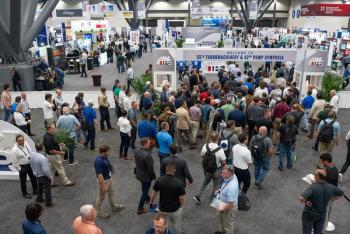
At the 2026 Turbomachinery and Pump Symposia, Opportune’s Dan Romito warned that grid constraints and a five-year gas turbine backlog are pushing AI data centers toward on-site power, while colleagues honored the legacy of the late Dara Childs.
The company conducted long-term durability testing in July 2024, confirming that its system achieved the planned power output and suppressed NOx and N2O emissions.
At the 2025 Cogeneration Award, IHI Corp. and IHI Power Systems received the Chairman’s Award in the Technology Development Category for a project titled: Development of the 2 MW-Class
IHI, Tohoku University, and the National Institute of Advanced Industrial Science and Technology successfully developed and demonstrated CO2-free power generation using a gas turbine fueled completely by liquid ammonia in 2022. This portion of IHI’s program fell under the Green Innovation Fund and the New Energy and Industrial Technology Development Organization.
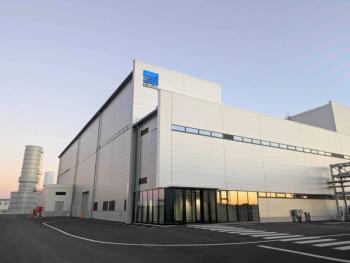
Starting in July 2024, IHI executed long-term durability testing at its Aioi Works in Aioi City, Japan, attempting to validate social implementation. The testing confirmed that IHI’s system achieved the planned power output and sufficiently suppressed N2O and NOx emissions. It also demonstrated durability performance comparable to conventional natural gas operation.
Electricity generated during the testing phase was recirculated and used on-site at Aioi Works. Also, by firing low-carbon ammonia as fuel, the project provided decarbonization value and accelerated decarbonization initiatives for Expo 2025 in Osaka, Kansai. Building on these project results, IHI is also progressing efforts toward
Among decarbonized fuels, IHI is prioritizing green ammonia and working to establish the complete value chain—from production, storage, and transportation to utilization—to validate and advance social implementation.
In April 2025, IHI Corp. and Akita University announced the successful development and testing of its
According to a representative from IHI, testing was conducted with a proprietary ultra-high-speed electric rotary machine equipped with gas bearings. Next, the company will address the challenges of HLFC system engineering, avoiding an impact on fuel efficiency due to installation-related weight increases. Akita University provided the testing site and supported the evaluation and measurements.
HLFC technology actively controls airflow through a powered system, suctioning air through minuscule holes on the wing’s leading-edge surface to minimize crossflow instability. At the wing’s rear, it creates a beneficial pressure gradient to replicate natural laminar flow. The combination of these control methods optimizes aerodynamic performance and efficiency. IHI also plans to address aircraft fuel efficiency, CO2 emissions, and additional operational improvements by integrating other technologies, such as aircraft electrification and hydrogen fueling systems.