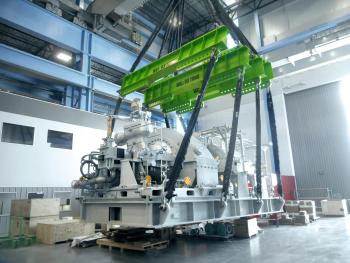
MHI Compressor International will supply turbomachinery for Shintech's new 625 KTA PEP-2 ethylene plant in Plaquemine, Louisiana, its second project with the company.
Ebara earns first marine type approval for liquid hydrogen cargo pumps, accelerating LH₂ shipping projects with certified, safer cryogenic equipment for next-generation carriers.
Ebara Elliott Energy has secured what the company describes as the world's first type approval for liquid hydrogen cargo pumps, marking a significant milestone for the emerging liquefied hydrogen (LH₂) shipping and maritime transport sector.
Type approval represents a formal certification from a recognized classification society confirming that a piece of equipment meets defined safety and performance standards for use in commercial marine applications. For rotating equipment engineers and procurement specialists, type approval is a prerequisite for specifying cargo-handling machinery aboard certified vessels — without it, even technically capable equipment cannot be legally deployed on class-certified ships. Achieving the world's first such certification for liquid hydrogen cargo pumps positions Ebara Elliott Energy at the forefront of what many in the energy transition space expect to become a rapidly expanding market.¹
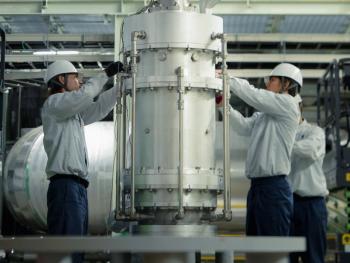
Liquid hydrogen presents some of the most demanding conditions encountered in cryogenic pump design. With a boiling point of approximately −253°C (just 20 K above absolute zero), LH₂ is colder than liquefied natural gas (LNG) by more than 90°C, and its extremely low density — roughly 71 kg/m³ — combined with its wide flammability range and high buoyancy as a vapor creates a markedly different risk and engineering profile compared to conventional cryogenic services. Pumps must maintain tight clearances and material compatibility to prevent hydrogen embrittlement, manage near-zero NPSH margins, and control leakage paths to avoid ignition risks. Ebara Elliott Energy's Cryogenic Products division, which the company notes has more than 40 years of continuous engineering advancement and operates the world's largest cryogenic test stand, brings a well-established design and validation infrastructure to this challenge.¹
The global liquid hydrogen supply chain remains nascent, but infrastructure development is accelerating. Japan, South Korea, Australia, and several European nations have invested in pilot and commercial-scale LH₂ carrier projects, with classification societies and regulatory bodies working in parallel to establish the technical frameworks needed to certify vessels and their onboard systems. Cargo pumps are critical components in LH₂ carriers, responsible for offloading the cryogenic cargo from shipboard tanks to shore-based receiving terminals. A certified, commercially available pump solution removes a key technical bottleneck for project developers and shipowners seeking to finalize equipment lists for newbuild LH₂ carriers.²
For turbomachinery engineers involved in FEED or detailed engineering for hydrogen carrier projects, this approval provides a qualified reference point for equipment selection and regulatory compliance planning.
Ebara Elliott Energy describes its Cryogenic Products division as the premier manufacturer of cryogenic pumps and expanders for the worldwide liquefied gas industry, with an installed base spanning LNG, LPG, and industrial gas applications. The company's cryogenic test stand — cited as the world's largest — provides the ability to conduct full-scale, cryogenic-condition performance and endurance testing, a capability that is particularly relevant for a novel service like LH₂ where operational field data is limited and testing rigor carries outsized weight with classification societies and end users alike.¹
As the hydrogen economy continues to mature, certifications of this kind are expected to serve as foundational references for the broader industrialization of LH₂ logistics.