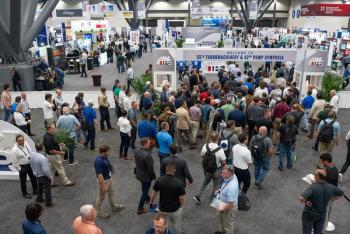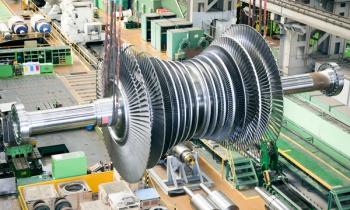

2025 orders hit a four-year high as gas turbine backlogs push data center developers toward a faster fix, but the rebound is landing just as one of the industry's largest OEMs explores selling the business behind it.
The partnership aims to enhance Canada’s role as a hub for sustainable energy logistics, while bolstering energy security on the demand side in hydrogen-importing countries.
At the
“This MOU with Kawasaki Heavy Industries reflects the Edmonton Region Hydrogen Hub’s role in connecting partners across the hydrogen value chain and advancing real, market focused opportunities for hydrogen adoption,” said Brent Lakeman, Executive Director, Edmonton Region Hydrogen Hub. “The Edmonton region’s ability to attract the attention of global companies like KHI is a demonstration of our collaborative ecosystem, industrial leadership, and long-standing expertise in clean energy. We are pleased to continue this strong partnership with KHI as we work together to drive momentum in our hydrogen economy.”
The feasibility of exporting liquefied hydrogen from Canada—a hydrogen-producing country—to hydrogen-importing counties including Japan is expected to increase via this collaboration. Simultaneously, the partnership is expected to improve Canada’s role as a hub for sustainable energy logistics, while bolstering energy security on the demand side in hydrogen-importing countries.
The four parties will proceed with studies and actively promote participation by other companies, research institutions, and government/public organizations, aiming to form a consortium that covers the entire hydrogen value chain: production, transportation, storage, and utilization. Ebara Elliott Energy was also
“Alberta’s Industrial Heartland is Canada's largest hydrocarbon processing region and Canada’s most advanced carbon sequestration hub—with more than $50 billion in existing capital investment—the Heartland offers the scale, low-cost feedstock, infrastructure, and carbon management capabilities required for competitive, low-carbon hydrogen production,” said Mark Plamondon, Executive Director, AIHA. “This MOU reflects AIHA’s readiness to work with global companies to advance heavy industrial developments in AIH and to support internationally integrated hydrogen supply chains for the advancement of global decarbonization efforts.”
Canada’s Edmonton region features the largest domestic hydrogen cluster with the world’s largest low-carbon hydrogen production facilities currently under construction. It contains access to low-cost feedstock such as natural gas and boasts a proven track record in CO2 capture and storage and commercial-scale low-carbon hydrogen production. These attributes make the region a potential safe and secure provider of hydrogen and international markets such as Japan.
Canada’s Hydrogen Strategy and the Government of Albertaʼs Hydrogen Roadmap highlight the region’s potential for hydrogen exports, and liquid hydrogen provides an important pathway for further investigation. Under the MOU, technologies for the transport of liquid hydrogen by rail and ship will be explored.
In March 2026, NuScale Power Corp. and Ebara Elliott Energy announced a