

News|Articles|April 23, 2026
MHIEC Completes Refurbishment Work at Hokubu Waste-to-Energy Plant
Author(s)James Cook
Listen
0:00 / 0:00
Key Takeaways
- MHIEC completed a 2020–2025 core-equipment refurbishment at Kagoshima City’s Hokubu waste-to-energy plant, renewing two 265-t/d stoker lines for 530 t/d total throughput.
- Process upgrades combined low-temperature SCR catalysting, low excess-air combustion, and steam-turbine uprating from 8.7 to 10.005 MW, delivering ~33.1% annual CO2-emissions reduction.
The modernization project raises power generation capacity to more than 10 MW while reducing annual CO2 emissions and improving operational stability and long-term performance.
Advertisement
Mitsubishi Heavy Industries Environmental & Chemical Engineering (MHIEC) has completed a multi-year refurbishment of core equipment at the
As part of the refurbishment work, upgrades were made to deteriorated primary equipment to achieve stable combustion and long-term operation. Also, a low-temperature catalyst was introduced to the selective catalytic NOx reduction (SCR) system to improve the heat recovery rate; a low excess air ratio incineration technology was adopted to improve combustion and boiler efficiency; and the output of steam turbines was increased from 8,700 kW to 10,005 kW, reducing CO2 emissions by approximately 33.1% per year.
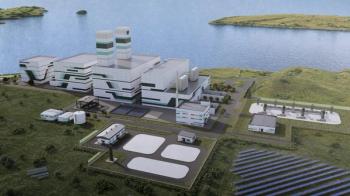
The Hokubu Waste-to-Energy Plant was initially designed and built by MHI and completed in March 2007. It features two stoker-type incinerators, each with a processing capacity of 265 tons per day, plus related equipment and delivers power generation capacity of 8,700 kW. MHIEC assumed MHI’s waste treatment plant business in 2008, acquiring the technological development capabilities in environmental systems and expertise in the construction and operation of waste management facilities in Japan and overseas.
MHIEC can propose total solutions from construction to operation based on its extensive track record. Going forward, MHIEC will proactively make proposals to extend the life of existing waste treatment facilities, counteract global warming, and reduce lifecycle costs such as maintenance and management costs to decarbonize energy.
About the Technology
A stoke-type incinerator injects air from beneath heat-resistant fire grates, mixing the waste and additional material by elevating it upwards and allowing for efficient incineration—the most common system used for municipal solid waste. The air volume required for combustion is suitably distributed to reduce the volumes of combusted air and exhaust gas. This increases the efficiency of the boiler and decreases the energy consumption of the induced draft fan.
Centrifugal Chiller
In mid-March 2026, Mitsubishi Heavy Industries announced plans to work toward introducing a
MHI’s centrifugal chillers are supported by extensive experience in industrial and mission-critical applications, including a domestic market share of approximately 60% in Japan. That track record provides a foundation for data center operators seeking dependable cooling infrastructure capable of supporting continuous, high-load operation. The proposed solution incorporates several design features aimed at improving performance and operational efficiency.
The system uses a high-efficiency centrifugal chiller design with an in-house developed compressor, optimized through a single-compressor configuration to achieve strong performance at both part-load and full-load conditions. MHI also plans to integrate plant-level control through its proprietary control system and Modular Chiller Plant architecture, enabling the effective use of free-cooling operating modes and improving Power Usage Effectiveness.
Advertisement
Related Content
Advertisement


Advertisement
Advertisement