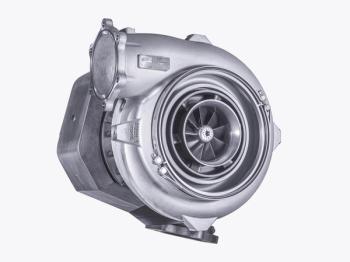
Siemens Energy is rebranding as Omterra, unifying its gas turbine, compressor, and Siemens Gamesa wind portfolios under one corporate identity.
This ship design satisfies Japan’s port entry restrictions at major power plants and ensures compatibility between ammonia loading/unloading terminals and cargo handling connections.
Mitsubishi Shipbuilding, Mitsui O.S.K. Lines, and Namura Shipbuilding developed a large-scale, ammonia-fired ammonia carrier and obtained approval in principle (AiP) from Nippon Kaiji Kyokai (ClassNK). Prior to approval, ClassNK evaluated basic design drawings and performed a hazard identification study, both of which exceeded the detail necessary for typical AIPs.
The vessel will be bigger than modern very large gas carrier/very large ammonia carrier (VLGC/VLAC) models, improving marine transport efficiency. Its ammonia engine is intended to minimize greenhouse gas emissions. This ship design also satisfies Japan’s port entry restrictions at major power plants and ensures compatibility between ammonia loading/unloading terminals and cargo handling connections equivalent to current VLGCs.
In late August 2024, Mitsubishi Shipbuilding, Imabari Shipbuilding, Japan Marine United Corp. and Nihon Shipyard formed a joint study with a collection of shipping companies, including “K” Line, NYK Line, and MOL, to establish standard specifications and designs for
The consortium will collaborate with industry stakeholders and shipyards, advancing Japanese decarbonization and construction supply chains by developing low-emission ships using low-carbon fuels, such as ammonia. The demand for LCO2 carriers is expected to grow alongside CCS projects that transport CO2 to storage sites by sea. Considering this market trend, the construction and supply of LCO2 carriers will strengthen the CCS value chain and improve economic efficiency.
On January 1, 2025, a joint venture between Mitsubishi Heavy Industries (MHI) and Imabari Shipbuilding—MI LNG Co.—was renamed to
MILES originally designed and sold LNG carriers but, in July 2023, it signed an agreement with Nihon Shipyard to perform design work for commercial ships besides LNG carriers. This consortium started joint studies to set standard specifications and designs for LCO2 carriers. In the wake of decarbonization initiatives in the maritime transportation sector, demand is increasing for low-carbon, LNG-fueled ships. The demand for ammonia- and methanol-powered vessels is growing as well.
More MHI News
In February 2025, Mitsubishi Power successfully delivered its hydrogen-ready M701 JAC gas turbine to Aluminum Bahrain’s (Alba)
Also in February, the National Office of Electricity and Drinking Water (ONEE) awarded Mitsubishi Power a contract to supply two M701 JAC gas turbines and auxiliary equipment for its