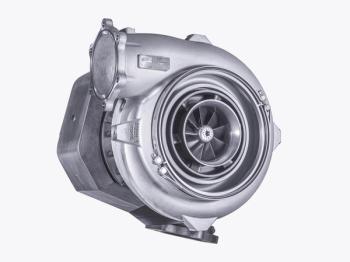
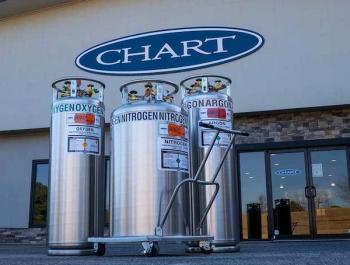
Baker Hughes completes its Chart Industries acquisition, forming a new industrial segment with expanded capabilities in LNG, hydrogen, and thermal management.
Fast LNG has a production capacity of 1.4 MTPA and will supply low-cost, clean LNG for New Fortress Energy’s downstream terminal customers.
New Fortress Energy (NFE) achieved first LNG for the initial Fast LNG (FLNG) asset offshore Altamira, Mexico. The FLNG design uses modular liquefaction technology on jack-up rigs and related offshore infrastructure, enabling faster deployment schedules compared to traditional liquefaction facilities.
"We are proud of the dedication and hard work by our team, who have completed more than 9 million work hours to bring this large-scale project to life at a record pace,” said Chris Guinta, Chief Financial Officer of NFE. “In doing so, our downstream customers now benefit from additional access to clean and reliable LNG, enabling sustained growth well into the future.”
With a 1.4 MTPA production capacity—approximately 70 TBtus—FLNG closes the vertical integration of NFE’s LNG portfolio. The asset will NFE in supplying low-cost, clean LNG for downstream terminal customers, adding more than $2 billion of infrastructure and improving the operational capability of NFE’s asset base.
“First LNG represents a transformative moment for our company, and the industry as a whole, and reaffirms our position as a fully integrated member of the global LNG market,” said Wes Edens, Chairman and CEO of New Fortress Energy.
In early July,
The Miami facility has one liquefaction train capable of producing 8,300 MMBtu of LNG per day and three LNG storage tanks with an approximate total capacity of 1,000 m3. It also contains two separate LNG transfer areas for truck and rail service and is authorized to export up to 60,000 tons per year of LNG to Free Trade Agreement (FTA) and non-FTA countries for a 20-year term. The LNG export term began on February 5, 2016.
In mid-April,
In March 2024,
In addition to the Energos Winter FSRU, the terminal also includes a 33 km, 20-inch pipeline which connects the facility to the inland Brasileira Gasoduto Bolivia-Brasil pipeline. The terminal is connected via pipeline to the Brazilian gas market, including more than 3.5 GW of power that does not have long-term gas supply contracts. TGS is also connected to more than 300 TBtu of industrial and residential gas consumers in southern Brazil.
With power and gas demands set to increase while Bolivia’s gas supply has declined, the TGS terminal serves as essential infrastructure for the Brazilian market. TGS will allow NFE to meet the region’s power and gas requirements.