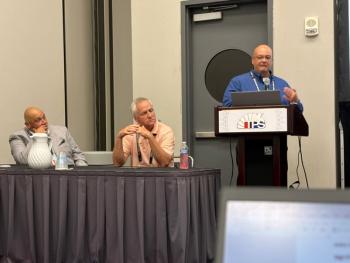
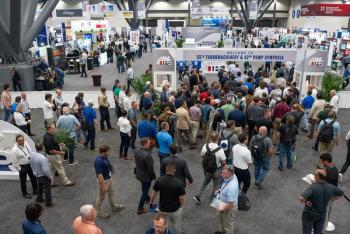
At the 2026 Turbomachinery and Pump Symposia, Opportune’s Dan Romito warned that grid constraints and a five-year gas turbine backlog are pushing AI data centers toward on-site power, while colleagues honored the legacy of the late Dara Childs.
The system will replace Co.Pro.B.’s gas-fired boiler, instead recovering low-pressure vapor and upgrading it to the required process conditions for sugar juice production.
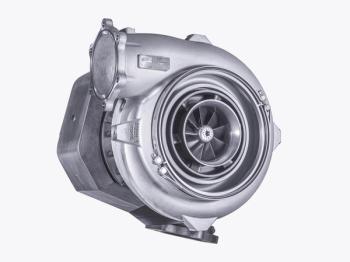
Per signed agreement with Co.Pro.B. – Italia Zuccheri, Turboden will supply its centrifugal
The MVR system will instead recover low-pressure vapor generated in the final evaporation stage—vapor that would otherwise be emitted into the atmosphere—and upgrades it to the required process conditions. It will recompress steam from 0.38 bar(a) and 80°C to 1.8 bar(a) and 117°C, delivering a total output of 22 tons per hour. By reusing internally generated steam, the system will notably reduce natural gas consumption while ensuring steam quality, reliability, and improved overall process efficiency.
“This new project in the electrification of high‑temperature process heat—particularly for industrial steam production—further strengthens Turboden’s position as a player in this field,” said Paolo Bertuzzi, CEO and Managing Director, Turboden. “Following the recent start‑up of the world’s largest steam‑producing heat pump for Delfort’s paper mill in Finland, Co.Pro.B.’s decision to adopt our technology represents a clear confirmation of the trust inour technology. MVR is a fundamental technology to decarbonize industrial processes and Turboden, with its new family of proprietary compressors, intends to play a role.”
Key features of the MVR solution include:
Co.Pro.B. required the MVR system to be installed within an existing space featuring strict dimensional constraints. In response, Turboden’s engineering team developed a compact solution that fit within the available footprint while maintaining optimal accessibility and service clearances. The system will be delivered on a preassembled skid to further streamline implementation, designed within the maximum transportable dimensions.
A modular, compact design and delivery will significantly reduce onsite erection and commissioning activities, minimizing downtime and enabling faster plant integration. The centrifugal MVR will ensure high compression performance and effortless integration with the plant’s existing evaporation stages.
In March 2026, Turboden America was selected by Tallgrass to supply three
The projects will also be supported by Turboden’s cloud-based AI monitoring system, Turboanalytics, to provide anomaly detection, predictive maintenance, and forecasting. These contracts qualify as waste energy recovery properties and are eligible for investment tax credit incentives of up to 50% under the Inflation Reduction Act, improving operational margins and long-term value.