
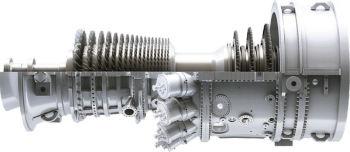
GE Vernova will perform rotor life extension work on five 9F gas turbines in Egypt, adding 13 to 15 years of life to about 1,250 MW of capacity.
NevadaNano is partnering with Blackline Safety to modernize combustible gas detection systems. NevadaNano’s line of microelectromechanical systems (MEMS)-based gas sensors, the Molecular Property Spectrometer (MPS) flammable gas sensors, are integrated into Blackline’s portfolio of cloud-connected G7 connected safety wearables.
NevadaNano MPS sensors represent a major innovation in sensor technology because of their accuracy and long-term stability. The sensors monitor environments for the lower explosive limit (LEL) levels of the 12 most common combustible gases, delivering a reading for individual gases and gas mixtures.
The MPS sensors also deliver a lower cost of ownership than traditional catalytic bead and non-dispersive infrared (NDIR) sensors because the sensors are immune to poisoning and their readings never drift. They come with a five-year life expectancy and are designed to integrate into existing safety devices.
Blackline’s G7 then uses data from the MPS sensor to create interactive visualization in Blackline Analytics. Refinery personnel can see where hydrogen was recently detected where it wasn’t previously.