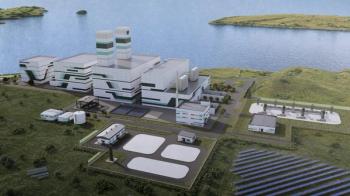

The Port of Victoria project would be only the second U.S. project to pursue NRC construction licensing for the GE Vernova Hitachi Nuclear Energy boiling water SMR design.
John Crane, a manufacturer of rotating equipment supplying engineered technologies and services to process industries, has launched three new innovations since March – a new seal gas booster, a seal gas filtration system, and a pusher seal for refined and light hydrocarbon products.
In March, the company released new products designed for refined and light hydrocarbon products as a solution to secondary seal contamination and hang up.
The Type 8628VSC, and both new versions of the Type 8648VRS (for flashing and non-flashing hydrocarbon duties) use a non-pusher secondary seal (NPSS) device. The products include a primary seal combinations for flashing and non-flashing hydrocarbons (8648VRS), non-contacting secondary seal capable of full pipeline pressure in failure conditions (8628VSC), and NPSS made from non-compressible flexible elastomer eliminates secondary seal hang-up.
Later that month, the company released three new filters in its series of Flow Conditioned Filter (FCF) seal gas filtration system. The new FCF Series, designed with a combination of new flow conditioning technologies, deliver up to 50 percent lower pressure drop at start up and in operation.
The new filter has a reduced filter system footprint and size with no impact to gas flow. It complies with API 692 filtration requirements for contaminants of 1 micron and smaller at efficiencies of 99.9 percent, coalescing performance down to 0.005 ppm (w) for improved centrifugal compressor reliability and operational efficiencies
In July, the company launched its new high-pressure GCU (Gas Conditioning Unit) Seal Gas Booster designed to support dry gas seals on turbo compressors.
The GCU Seal Gas Booster generates a pressure differential between the supply gas and process gas across the faces to keep the seal faces clean. For any application where external seal gas/alternative seal gas is not available, the booster will provide a reliable, automatically triggered source of clean, dry process gas. In addition, the booster is good match for any installation where API 692 requirements apply, as the necessity for seal gas boosters as best practice is repeatedly noted throughout the standard.