News|Articles|April 13, 2026

Baker Hughes Divests Waygate Technologies, Doubles Down on Rotating Equipment and LNG

Author(s)Alicia Bigica
Listen
0:00 / 0:00

Key Takeaways

  • Selling Waygate to Hexagon monetizes a non-core NDT asset and reinforces a portfolio shift toward rotating equipment, flow control, digital, production optimization, and decarbonization.
  • IET performance is central, with record backlog and orders and margins progressing toward a 20% target, reflecting demand for turbomachinery, compression, and LNG technologies.
SHOW MORE

Baker Hughes sells Waygate for $1.45B, further tightening its focus on turbomachinery and LNG as demand continues to drive investment across the industry.

Baker Hughes has announced the sale of its Waygate Technologies non-destructive testing business to Hexagon AB for approximately $1.45 billion in cash, a divestiture that, taken alongside the company's $13.6 billion pending acquisition of Chart Industries, marks another move in a deliberate portfolio transformation that further confirms that the company is getting out of industrial inspection and going all-in on turbomachinery, LNG, and energy technology.

Why Is Baker Hughes Selling Waygate Technologies?

Baker Hughes has spent the better part of two years repositioning itself away from a diversified oilfield services model and toward a focused energy solutions company. “By sharpening our focus on our core strengths—rotating equipment, flow control, digital, production optimization, and decarbonization—we are strategically positioning Baker Hughes to deliver higher returns while accelerating investment in high-growth areas that are aligned with our long-term vision,” CEO Lorenzo Simonelli said in a press release.1

The company's Industrial & Energy Technology (IET) segment closed 2025 with a record order backlog exceeding $32.4 billion and $14.9 billion in full-year orders, driven by surging demand for gas turbines, compression equipment, and LNG technology. IET margins are tracking toward a 20% target.

Proceeds from the $1.45 billion Waygate sale are earmarked to reinforce the balance sheet and support earnings durability as the company absorbs Chart Industries, whose liquefied gas processing and heat transfer technologies directly complement Baker Hughes' existing LNG and compression portfolio.

Where Is Baker Hughes Investing After the Waygate Sale?

The cleaner picture of what Baker Hughes is becoming emerges from its order activity over the past twelve months. The company has been stacking turbomachinery and LNG contracts at a pace that few in the industry can match.

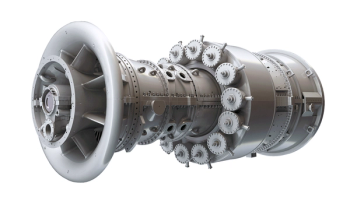
On the power generation side, Baker Hughes has been a major beneficiary of AI-driven data center demand. The company secured an order for 16 NovaLT gas turbines to power Frontier Infrastructure's data center projects in Wyoming and Texas—delivering up to 270 MW of behind-the-meter generation capacity—and has gone from zero data center orders in 2024 to $1 billion in 2025, with a target of $3 billion from 2025 to 2027. Most recently, Baker Hughes supplied its first NovaLT16 gas turbines and centrifugal compressors to South America for a natural gas pipeline project in Argentina—the technology's first deployment on the continent.

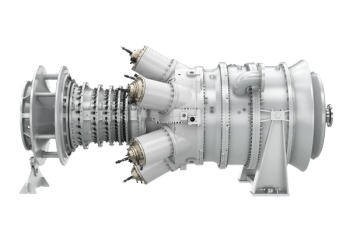
On the LNG side, the contracts have been equally aggressive. Baker Hughes secured liquefaction equipment for Train 5 at Rio Grande LNG, adding two Frame-7 gas turbines and six centrifugal compressors to a project portfolio that already spans multiple trains, and continues to expand its aeroderivative services business globally, including a 60-month service agreement with Petrobras covering up to 64 LM2500 and LM6000 gas turbines across Brazil's offshore fleet.

What to Watch at Q1 Earnings

The Waygate announcement lands ten days before Baker Hughes reports Q1 2026 results on April 23, 2026. For turbomachinery professionals tracking the company's direction, the key questions will be the pace of IET order intake, how Chart Industries accelerates Baker Hughes' position in gas processing, and whether the NovaLT data center pipeline continues to build. With the Waygate chapter now closing, Baker Hughes enters the second quarter as a more focused—and increasingly turbomachinery-centric—company.