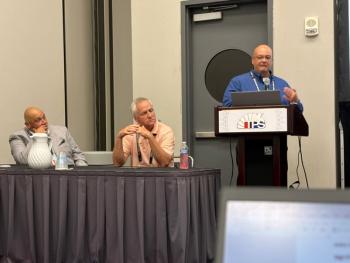
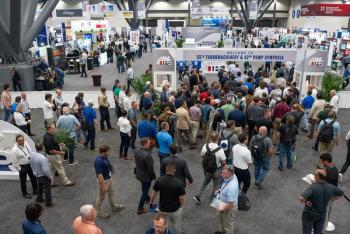
At the 2026 Turbomachinery and Pump Symposia, Opportune’s Dan Romito warned that grid constraints and a five-year gas turbine backlog are pushing AI data centers toward on-site power, while colleagues honored the legacy of the late Dara Childs.
The 40,000-cubic-meter vessel will support a government-backed demonstration aimed at commercializing the global transport of liquefied hydrogen by 2030.
Kawasaki Heavy Industries and Japan Suiso Energy have signed a contract to build the world’s largest
The project aims to demonstrate ship-to-shore loading and unloading of liquefied hydrogen and to conduct ocean-going trials by fiscal year 2030, according to the companies. The newly contracted vessel is intended to serve as a foundation for scaling hydrogen transport to commercial levels in the 2030s, when demand for hydrogen is expected to increase as countries pursue decarbonization strategies.
Japan Suiso Energy plans to use the vessel in combination with a liquefied hydrogen terminal currently under construction in Ogishima, Kawasaki City. The demonstration program will evaluate performance, safety, durability, reliability, and economic viability to support the development of a global hydrogen supply chain. The vessel will feature cargo tanks capable of maintaining liquefied hydrogen at cryogenic temperatures using a high-performance insulation system designed to limit boil-off gas generated by external heat. The design is intended to enable long-distance, large-volume transport of liquefied hydrogen.
It will also incorporate an electric propulsion system that includes both conventional oil-fired generator engines and a dual-fuel generator engine capable of operating on hydrogen and oil. Boil-off gas from the cargo tanks will be recovered and used as fuel through an onboard hydrogen gas supply system equipped with compressors and heat exchangers, a feature aimed at reducing CO2 emissions during transport.
The ship will be equipped with a cargo handling system designed to load and unload large quantities of liquefied hydrogen. Double-walled, vacuum-insulated piping will be used to maintain extremely low temperatures and enable safe transfer between shore facilities and onboard tanks. The vessel’s hull form and draft are designed to account for the low density of liquefied hydrogen, allowing for reduced power requirements and improved propulsion efficiency. The hydrogen fuel, fuel supply, and cargo handling systems have undergone risk assessments, and safety measures have been incorporated to protect crew members, the environment, and the vessel’s structural integrity.
Kawasaki Heavy Industries previously built the world’s first liquefied hydrogen carrier, the Suiso Frontier, which has a capacity of 1,250 cubic meters. The company has also developed hydrogen infrastructure, including a liquefied hydrogen receiving terminal in Kobe. In 2022, Kawasaki participated in what it described as the first successful pilot transport of liquefied hydrogen between Japan and Australia.
In early December 2025, Kawasaki Heavy Industries and Japan Suiso Energy recently hosted a groundbreaking ceremony for the