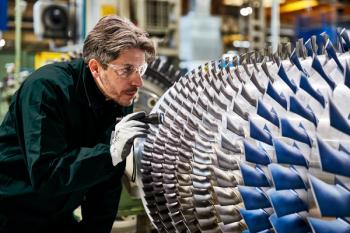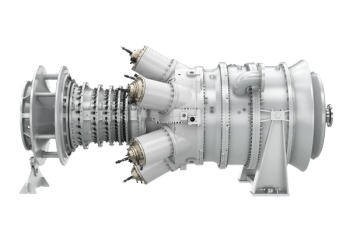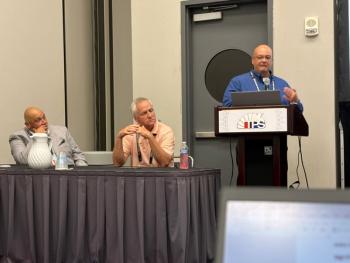
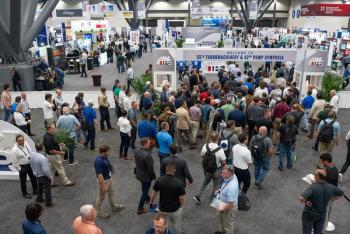
At the 2026 Turbomachinery and Pump Symposia, Opportune’s Dan Romito warned that grid constraints and a five-year gas turbine backlog are pushing AI data centers toward on-site power, while colleagues honored the legacy of the late Dara Childs.
U.S. policy leaders signaled accelerating LNG, coal, and nuclear actions while interest in hydrogen, carbon capture, and offshore wind cooled amid affordability concerns.
Over 11,000 total attendees from 90+ countries packed the 44th annual CERAWeek conference in Houston, TX. While all forms of energy including oil, gas, nuclear, and renewables were well represented, the conferences’ focus was to address the surge in demand for electricity, especially in North America. The data center builders have an urgency to install power generation to win the arms race for AI dominance; meanwhile, delivery schedules for gas turbines and other forms of power generation are 3 - 4 years out. This energy shortage has been compounded by the military action in Iran, which began just a few weeks before the CERA conference.
The pendulum has clearly swung from renewable energy back to dispatchable fossil fuel and nuclear power generation and, while almost 1,200 speakers participated at CERA, there was a noticeable reduction in interest for projects relating to hydrogen, carbon capture, and wind. Solar energy, in combination with battery storage, has stayed relevant due to continuing cost reduction and the fact that solar + batteries can be delivered and placed into service more rapidly than gas turbines.
The first speaker at CERA was U.S. Energy Secretary Chris Wright. He did not mince any words in his message: “Energy is life and the world needs massively more of it; We will get rid of nonsense and restore common sense. Since lifting the pause on permits for LNG exports, over 18 BCF of permits have been approved and when this liquefaction is built out, the United States will be the world leader in LNG production by far. We have stopped energy subtraction and reversed the closure of 17 GW of coal-fired plants that had been scheduled for premature retirement.”
Wright also noted that several mothballed nuclear plants are being brought back into service, with the operational licenses of many other projects now being extended. In February 2026, the Department of Energy (DOE) loaded a prototype small nuclear reactor stored in Los Angeles into a cargo plane and flew it to Utah for quick installation—it’s about the size of a minivan and rated at 5 MW. There will be a demonstration of its safety functionality by July 4, 2026; not electricity production but operating the thermal system that would produce heat for steam. The DOE seems determined to jumpstart the SMR nuclear program with modules that are 1 - 2 % the capacity of a conventional nuclear reactor.
The star-studded lineup of speakers also included Doug Burgum, the US Secretary of the Interior. Burgum signed a settlement agreement on-stage with Patrick Pouyanné, CEO of France-based TotalEnergies.
The settlement agreement with the U.S. Department of the Interior was to relinquish TotalEnergies’ Carolina Long Bay offshore wind lease (Lease OCS-A 0545) and its New York Bight offshore wind lease (Lease OCS-A 0538), both awarded in 2022. The two offshore wind projects had become uneconomic after certain subsidies were cancelled. Under the terms of the settlement, TotalEnergies will be reimbursed $133,333,333 for the Carolina Long Bay lease and $795,000,000 for the New York Bight lease.
As part of the deal, TotalEnergies will invest $928 million in the following projects in 2026:
According to TotalEnergies, “Offshore wind developments in the United States, unlike those in Europe, are costly and might have a negative impact on power affordability for U.S. consumers. Since other technologies are available to meet the growing demand for electricity in the United States in a more affordable way, TotalEnergies considers there is no need to allocate capital to this technology in the United States.” Additionally, TotalEnergies has pledged not to develop any new offshore wind projects in the United States.
TotalEnergies also recently signed a Letter of Intent with Glenfarne, lead developer of the Alaska LNG project, for the long-term offtake of 2 MTPA of LNG over 20 years, subject to the project’s final investment decision. All the major LNG producers worldwide were at CERAWeek to discuss the ramifications of the impairment of the Strait of Hormuz and damage to the Ras Laffan LNG plant in Qatar. In just a few weeks, the short-term LNG market changed from oversupply to shortage.
Senior executives from major hyperscalers and data center developers were also at CERA to tell their story. Some of the messages were new:
Data center developers seem to have realized that their often-stated need for 99.999% power supply reliability is a fantasy for a behind-the-meter power project—even the best grid operators do not deliver this. This level of reliability might be achievable for a black-box server but power plants need maintenance, both scheduled and unscheduled. Storms happen. The truth is that data centers do not need 99.999% power supply reliability. Portions of the computing activity can be turned down when needed with no damage to the servers. Sure, there is some lost revenue, but this is a business reality to manage.
Developers also realized that connecting to the grid is beneficial for the data center and community. In the race to get the data center commercially operational, simple-cycle gas turbines installed behind the meter can be part of the solution. In longer term however, there are benefits to both grid and data center for full connection: This enables demand-side management programs, arbitrage of electricity, and response to storm emergencies.
Utilities do not normally encourage customers to own generation. History shows that independent power plants built for large loads or market-based power purchase agreements are often sold to the grid utility later in life. This releases tied-up capital and provides a return to focus on core business. Without regard to ownership, locating a power plant adjacent to a large load is economically efficient because it reduces the burden on the transmission system.
Deregulation was also a big theme at CERA and Lee Zeldin, Director of the U.S. Environmental Protection Agency (EPA), explained that over 500 environmental actions have been taken during the first year of the Trump administration. The federal EPA is being instructed to speed up approvals for oil and gas production facilities and pipelines. Even more important was the EPA revoking its 2009 ruling known as the “Endangerment Finding”. It classified greenhouse gas emissions, most notably CO2, as a threat to public health.
The repeal eliminates all greenhouse gas emissions standards for cars and trucks and could unleash a broader undoing of climate regulations on stationary sources such as power plants and oil and gas facilities. The decision triggered a series of lawsuits by 24 states and several cities that disagreed with the EPA repeal. The case will likely end up before the U.S. Supreme Court but for now, what was a rule and not a law, has been revoked.
Mark Axford is the founder of Axford Turbine Consultants and is a contributing editor for Turbomachinery International.