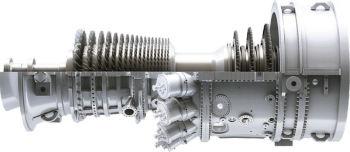
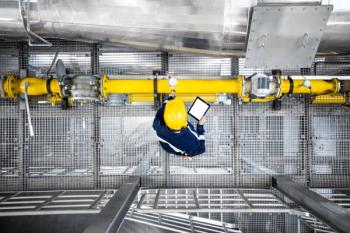
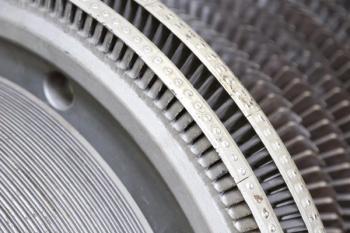
Gas turbines draw enormous volumes of air and the contaminants air carries—sand, dust, salt, and moisture. These elements corrode internal metal parts, and lead to unplanned outages. Because ambient conditions vary widely from one location to another, a filtration approach suited to one site can fail at another, producing pressure differential spikes and lost output. This eBook brings together filtration and rotating-equipment insights to explain why intake filtration must be matched to each site's environment. It examines Life Cycle Cost (LCC) analysis, coalescers, cartridge filters, findings from MTRs (mobile test rigs) deployed across four global environments, and the capital expenditure (CapEx) trade-offs of refurbishing versus replacing aging gas turbines. It also highlights how fouling, degradation, and the surge curve affect turbocompressor efficiency and reliability.
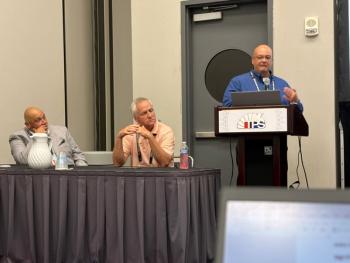
At the 2026 Turbomachinery and Pump Symposia, John Crane’s Brian Kalfrin explained why volatile natural gas liquids demand custom-engineered seals, from face material selection to installation and flush rates.
The two-frame platform for two-stroke marine engines is built around a cartridge design that lets operators exchange the rotating assembly during port calls.
The Port of Victoria project would be only the second U.S. project to pursue NRC construction licensing for the GE Vernova Hitachi Nuclear Energy boiling water SMR design.