

Feature|Videos|November 13, 2026
Securing the Supply Chain: OEM Programs and a Formal Sparing Strategy
Key Takeaways
- Discover how OEM supply-chain and storage programs are designed to minimize wait times for critical parts.
- Learn how one operator's formal sparing philosophy and RAM report drive its capital-versus-operational spares decisions.
Shady Saeed and Omar Al-Essa reveal two very different strategies for securing spare parts: one built around OEM programs, the other around a strict internal policy.
Advertisement
Episodes in this series
Sponsored by FS-Elliott
With spare parts availability under pressure, OEMs and end users are taking different paths to secure supply. Shady Saeed describes how FS-Elliott has expanded its global supply chain and built long-term service and parts agreements, including storage facilities that keep critical components like rotors preserved and ready to dispatch, programs he says grew directly out of feedback from end users.
Omar Al-Essa shares Saudi Aramco's stricter stance on the same problem: no non-OEM parts, full stop, governed by a formal sparing philosophy document and a Reliability, Availability, and Maintainability (RAM) report that determines whether a facility carries a capital spare, an operational spare, or a full online standby unit.
Anyone managing a spare parts strategy will find two contrasting, field-tested approaches to the same challenge in this episode.
Advertisement
Related to this article
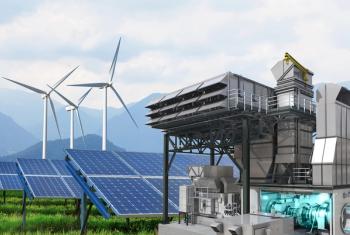
GE Vernova says the LM2500XPRESS aeroderivative package has been validated on blends of up to 50% hydrogen and the LM6000VELOX package has been tested on 100% hydrogen at its new Greenville, S.C., test facility.
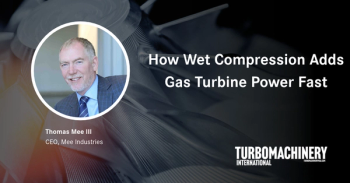
Mee Industries CEO Thomas Mee III explains how wet compression differs from inlet fogging, what it costs compared with a new turbine and how it can help plants meet capacity commitments.
Baker Hughes reported a record $39.4 billion IET backlog in Q3, with gas technology equipment orders up 43%, and raised its full-year IET order guidance.

Mitsubishi Power Americas will add 450,000 square feet and more than 220 jobs at Savannah Machinery Works in Georgia as demand for advanced-class gas turbines grows.
GE Vernova grew gas equipment backlog and slot reservations from 116 GW to 122 GW in Q3, expects at least 130 GW by year-end, raised 2026 guidance and agreed to buy Trench Group for $9 billion.
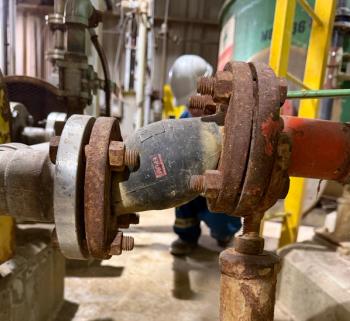
A review of inspection practices, common failure modes, and maintenance planning for rubber expansion joints in power plant piping systems.
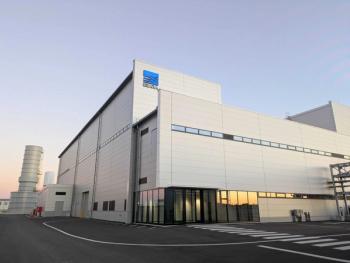
Ebara Elliott Energy Opens Liquid Hydrogen Pump Test Center and Cryogenic Manufacturing Hub in Japan
Ebara Elliott Energy opened its Futtsu No. 2 District in Japan, combining a liquid hydrogen pump test center and a cryogenic equipment plant on one site.

The motor-driven compressor package targets a 1,500 t/day green ammonia facility in India, with delivery in late 2027 and commissioning in 2028.
Advertisement
Advertisement