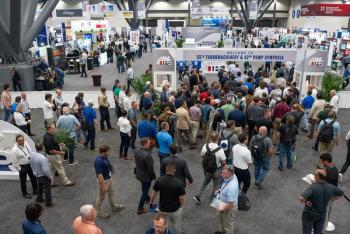
At the 2026 Turbomachinery and Pump Symposia, Opportune’s Dan Romito warned that grid constraints and a five-year gas turbine backlog are pushing AI data centers toward on-site power, while colleagues honored the legacy of the late Dara Childs.
Hydrogen is gaining traction as the turbomachinery industry balances near-term emissions reductions with long-term fuel flexibility amid evolving regulatory and infrastructure conditions.
Hydrogen-ready and low-emissions turbine technologies are gaining momentum across the turbomachinery industry in 2025 as power producers, industrial operators, and OEMs respond to tightening emissions targets and long-term decarbonization goals. While natural gas remains the dominant fuel for most turbines in operation, advances in combustion design, materials, and controls are expanding the role of hydrogen blends and other low-carbon solutions.
Industry experts say the focus in 2025 is less about a wholesale shift to hydrogen and more about preparing turbine fleets for future fuel flexibility while reducing emissions today. As a result, hydrogen readiness, improved efficiency, and compatibility with emissions-reduction technologies are increasingly standard considerations in new turbine projects and upgrades.
In the turbomachinery sector, “hydrogen-ready” typically refers to turbines designed or modified to operate on blends of hydrogen and natural gas, with a pathway to higher hydrogen concentrations over time. Most commercial applications today involve hydrogen blends ranging from 5% to 30% by volume, depending on turbine design, combustion system, and operating conditions.
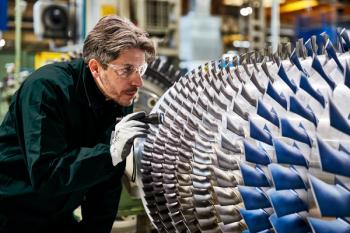
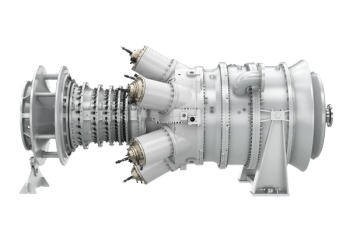
OEMs emphasize that hydrogen readiness is not a single specification but a combination of design features. These include advanced combustors capable of managing hydrogen’s higher flame speed, control systems that adjust fuel-air mixing in real time, and materials that withstand increased temperatures and combustion dynamics.
In 2025, several turbine platforms are being marketed as capable of operating on higher hydrogen blends with minimal hardware changes, while others require staged upgrades as hydrogen availability increases. Full conversion to 100% hydrogen remains largely limited to demonstration projects and pilot installations.
Regulatory pressure remains a key driver behind low-emissions turbine development. Governments and regulators continue to tighten limits on NOx, CO2, and other pollutants, particularly in regions with aggressive climate targets. At the same time, corporate sustainability commitments are influencing purchasing decisions by utilities, energy companies, and large industrial users.
Low-emissions turbine technologies address these pressures through multiple pathways. High-efficiency combined-cycle designs reduce fuel consumption and carbon intensity per MWh. Dry low-NOx combustors and advanced staging techniques help limit criteria pollutants without relying heavily on water or steam injection. Digital controls further optimize combustion and performance across varying load conditions.
Hydrogen capability is increasingly viewed as an extension of these efforts rather than a standalone solution. By enabling partial substitution of natural gas with hydrogen, operators can reduce lifecycle carbon emissions while maintaining dispatchable generation.
Despite progress,
Materials and components must also withstand different operating conditions. Combustion hardware, seals, and fuel delivery systems are being redesigned or reinforced to manage temperature gradients and dynamic loads associated with hydrogen blends. Supply infrastructure presents another constraint. Hydrogen availability varies widely by region, and large-scale production, transport, and storage infrastructure is still developing. As a result, many operators are cautious about committing to high hydrogen blends without long-term fuel certainty.
Retrofit programs are playing a central role in hydrogen readiness strategies. Rather than replacing entire turbine fleets, operators are evaluating targeted upgrades that enable higher hydrogen blends or improved emissions performance. These may include combustor replacements, control system upgrades, or modifications to fuel handling systems.
OEMs and service providers report growing interest in modular retrofit packages that allow incremental progress. This approach aligns with uncertain hydrogen timelines while preserving optionality for future decarbonization pathways.
Life extension and uprate projects are increasingly bundled with emissions-related upgrades, allowing operators to improve efficiency and environmental performance while extending asset life. In many cases, these projects are more cost-effective than new builds and can be completed within shorter outage windows.
Economic considerations heavily influence adoption in 2025. Hydrogen-ready turbines typically carry a cost premium, and the business case depends on regulatory incentives, carbon pricing, and access to low-cost hydrogen. In regions with strong policy support, early adoption is more common, while other markets take a wait-and-see approach.
Operators are also weighing operational risk. Running higher hydrogen blends requires careful planning, testing, and operator training. As a result, many deployments begin with low blend levels to gain experience before scaling up. Service and maintenance implications are another factor. OEMs are expanding service offerings and monitoring capabilities to support hydrogen-capable turbines, addressing concerns about reliability and long-term performance.
Looking ahead, industry analysts expect
In the near term, hydrogen readiness provides flexibility rather than immediate transformation. Combined with efficiency gains, digital optimization, and other emissions-reduction strategies, these technologies position turbines to play a role in a lower-carbon energy system. In 2025, hydrogen-ready and low-emissions turbines reflect a pragmatic approach to decarbonization—one that balances environmental goals with operational realities and recognizes the continued importance of reliable, dispatchable power in a changing energy landscape.