
News|Articles|November 6, 2024
Kawasaki Heavy Industries Agrees to Develop, Deploy Post-Combustion Capture Technology
Author(s)James Cook
Kawasaki and Low Emission Technology Australia will reduce emissions from the heavy industry by capturing CO2 at the source.
Advertisement
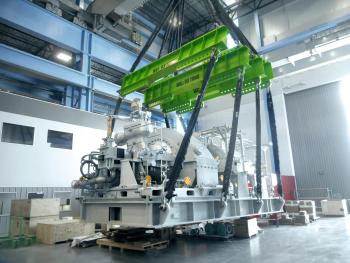
Low Emission Technology Australia (LETA) and Kawasaki Heavy Industries (KHI) signed a memorandum of understanding to reduce emissions from heavy industries. The agreement establishes cooperation in the development and deployment of post-combustion capture (PCC) technology, which reduces emissions by capturing CO2 at the source and prevents atmospheric dispersal.
“It is our honor to have this opportunity to work with LETA for the development and deployment of technology for PCC together,” said Katsuki Yasuhara, Senior Manager, Carbon Neutral Business Strategy Office of Kawasaki. “We believe the collaboration of Kawasaki’s carbon capture technology and LETA will accelerate decarbonization across the globe starting from Australia and Japan.”
KHI is attempting to reduce global CO2 emissions and contribute to a net-zero carbon society through its technologies, such as Kawasaki CO2 Capture. LETA is also developing decarbonization technologies in Australia and internationally with global trading partners.
“We are proud to have formalized our working relationship with Kawasaki,” said Mark McCallum, Chief Executive of LETA. “Kawasaki is a leading innovator in low emission technology, and we share a commitment to a net-zero future for heavy industry. We are looking forward to working with Kawasaki to further develop PCC technology and explore its potential to decarbonize industry in both Japan and Australia.”
KHI News
In late January 2024, KHI agreed to begin demonstration tests in April for the
Tracking this data will ensure traceability for low-carbon hydrogen, visualize complex hydrogen distribution, and facilitate concise hydrogen trading. KHI also plans to launch four additional services and expand its service offerings to meet market demand. The four services will support hydrogen trading, low-carbon hydrogen certification applications, assessment and management of greenhouse gas emissions and carbon intensity and ensure traceability through the digital management of attribute information.
Also in January, KHI, Toyo Engineering, JGC Corp., and Chiyoda Corp. signed an agreement to establish a joint venture to enhance the front-end engineering design (FEED) execution for a
These assets include two hydrogen liquefaction plants capable of processing 60 tons per day, five onshore liquefied hydrogen storage tanks with a capacity of 10,000 m3 each, export terminal facilities for large, liquefied hydrogen carriers, and related facilities at the liquefaction/export terminal in Hastings, Australia.In addition to executing the FEED, the partners will assess the optimal equipment requirements, specifications, and costs for demonstration tests to commercialize JSE’s liquefied hydrogen supply chain.
Advertisement
Related Content
Advertisement

Advertisement
Advertisement
Trending on Turbomachinery Magazine
1
FS-Elliott Expands Polaris Line With High-Capacity P750 Centrifugal Compressor
2
Keeping Critical Drivetrains Online: A Lifecycle Approach to Gearbox Reliability, Repair, and Aftermarket Support
3
MHI Compressor International to Supply Turbomachinery for Shintech's PEP-2 Ethylene Plant
4
Accelleron Raises 2026 Guidance as Data-Center Turbocharger Demand Doubles
5