
Siemens Energy is rebranding as Omterra, unifying its gas turbine, compressor, and Siemens Gamesa wind portfolios under one corporate identity.
By 2030, the Kawasaki LH2 Terminal will enter operation alongside a newly constructed liquefied hydrogen carrier, advancing Japan’s effort to establish a hydrogen supply chain.
Kawasaki Heavy Industries (KHI) and Japan Suiso Energy (JSE) recently hosted a groundbreaking ceremony for the
A joint venture led by KHI is the primary contractor handling the facilities’ design and construction, while JSE manages the project. Additionally, a 40,000 m3 liquefied hydrogen carrier—among the largest in the world—will be constructed for the terminal at JFE Steel Corp.’s site. The facilities, hydrogen carrier, and the terminal itself will serve as a foundation for the full-scale operation of Japan’s future hydrogen supply chain.
The Kawasaki LH2 Terminal will support the “Liquefied Hydrogen Supply Chain Commercialization Demonstration” project—an initiative financed by the Green Innovation Fund Project and promoted by the New Energy and Industrial Technology Development Organization. By 2030, the terminal will enter operation alongside a newly constructed liquefied hydrogen carrier while Japan determines the requirements for a commercial, international hydrogen supply chain: performance, safety, durability, reliability, economics, and commercialization.
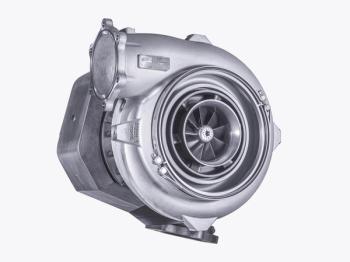
In March 2025, KHI started building a
The new machine achieves high-boosting performance through ultra-high-speed rotating technology, including KHI’s newly developed impeller, which optimizes a small molecular weight gas like hydrogen. Its centrifugal design handles high flow rates and reduces the installation footprint by approximately 86% compared to current hydrogen compressors. It is designed to increase the pressure of refrigerant hydrogen gas and improve efficiencies in the liquefaction process, contributing to lower hydrogen supply costs. After pressure boosting, the refrigerant gas cools the feed hydrogen gas, which serves as a raw material for transportable liquefied hydrogen.
In addition to using the compressor at hydrogen liquefaction plants, KHI will apply its collected knowledge and data to develop new centrifugal hydrogen compressors for hydrogen supply pipelines. These transport-centric machines will help to satisfy future demands as hydrogen energy expands. Also, KHI is currently developing a large-scale centrifugal hydrogen compressor designed for 100% pure hydrogen to enhance liquefaction efficiency.
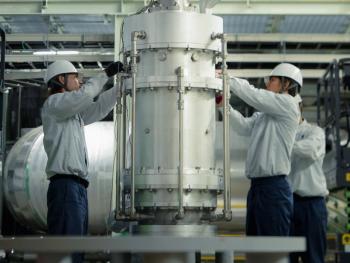
In late November, KHI successfully constructed a commercial-scale CO2 capture and separation
DAC testing will attempt to validate capturing CO2 from the atmosphere, while PCC testing will reduce CO2 emissions from facilities burning fossil fuels. Through these demonstrations, KHI is progressing the technical verification required to upgrade and upscale its KCC technology and develop advanced CO2-capture operations.