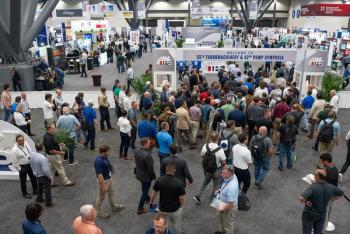
At the 2026 Turbomachinery and Pump Symposia, Opportune’s Dan Romito warned that grid constraints and a five-year gas turbine backlog are pushing AI data centers toward on-site power, while colleagues honored the legacy of the late Dara Childs.
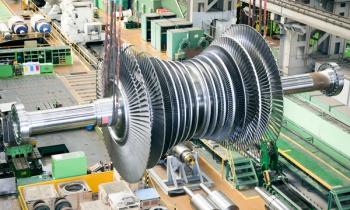
Mitsubishi Heavy Industries built and supplied main power-generating equipment, including the steam turbines, circulating fluidized bed boiler, and more.
Mitsubishi Power finished construction for a 50-MW-class woody biomass-fired power plant in Hyuga, within Japan’s Miyazaki Prefecture, and handed over the facility within the contract period. The Hyuga Biomass Power Plant, developed by a Mitsubishi Heavy Industries (MHI) consortium as part of a turnkey solution for engineering, procurement, and construction (EPC), will be operated by a special purpose company—Hyuga Biomass Power Co. Hyuga Biomass Power is jointly owned by Osaka Gas Co., ITOCHU Corp., Tokyo Century Corp., and Tokyo Energy & Systems Inc.
The power plant facility contains a steam turbine, circulating fluidized bed (CFB) boiler, generator, and additional equipment that offers high combustion efficiency for biomass power generation. Increased power generation and fuel efficiency will reduce the plant’s environmental impact. As part of its EPC contract, MHI built and supplied main power generating equipment, including the steam turbines, CFB boiler, and other large auxiliary machinery.
MHI Power Environmental Solutions, an MHI Group company, provided the air quality control systems and Mitsubishi Electric Corp. supplied the generator and electrical components. Fujita Corp. handled the civil engineering and construction.
MHI Group News
Last week,
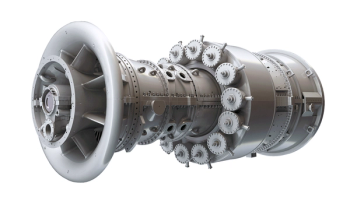
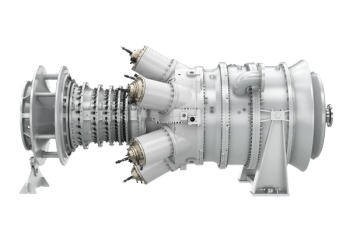
Each plant is equipped with four M701 JAC gas turbines, steam turbines, and heat recovery steam generators, supporting a reliable and sustainable energy supply for Thailand’s energy security and economic growth. On October 1, the first seven units installed across Chonburi and Rayong collectively logged 100,000 actual operating hours. The M701 JAC turbine delivers 64% power generation efficiency, reducing fuel costs and carbon emissions.
And, in September,
KM CDR was installed at Eni’s Casalborsetti natural gas treatment plant by NEXTCHEM, the project’s technology integrator, while KT Integrated E&C Solutions completed engineering, procurement, and construction works at the site. MHI delivered the process design package and is licensing the technology. At the plant, MHI’s carbon-capture process treats low-CO2 flue gas from a natural gas turbine driving a turbocompressor. With CO2 concentration levels less than 3% and low atmospheric pressure in the exhaust, the technology is reducing CO2 emissions by 90% with peaks of 96%.
Following this installation, Mitsubishi Heavy Industries Compressor International Corp. successfully