
Siemens Energy's Gas Services orders surged 62% to a record as the company joined GE Vernova and Baker Hughes in reporting a record turbomachinery quarter.
From gas turbines to digital engineering, women are gaining visibility in turbomachinery amid industry efforts to improve inclusion and career-building opportunities.
Women are playing an increasingly visible role in turbomachinery, contributing to advancements in gas turbines, compressors, pumps, and power systems while industry groups, universities, and companies work to broaden participation in a male-dominated field. Turbomachinery, which includes rotating equipment used to convert energy in power generation, oil and gas, aviation, chemicals, and industrial processes, has historically drawn from a narrow talent pool. Engineering teams have often been overwhelmingly male, reflecting broader trends in mechanical engineering and related disciplines.
That dynamic is gradually changing. Across academia, research institutions, and industry, more women are entering turbomachinery-related careers, taking on roles ranging from aerodynamic design and combustion research to digital engineering, asset optimization, and executive leadership. Their growing presence is reshaping how the sector approaches innovation, workforce development, and long-term competitiveness.
Women’s contributions to turbomachinery span the full equipment lifecycle, from conceptual design and modeling to manufacturing, commissioning, and long-term operation. Female engineers and researchers are working on turbine aerodynamics, advanced materials, combustion systems, noise reduction, digital twins, and performance optimization—areas critical to improving efficiency, reliability, and emissions performance.
In power generation, women engineers are involved in the development and operation of gas turbine combined-cycle plants, nuclear turbine islands, and emerging hydrogen-capable systems. In the oil and gas and industrial sectors, they contribute to compressor design, pipeline integrity, rotating equipment maintenance strategies, and reliability programs that help reduce downtime and operating costs.
Academic researchers, many of them women, are advancing turbomachinery science through experimental testing, computational fluid dynamics, and materials research. Their work underpins improvements in blade cooling, sealing, vibration control, and fuel flexibility, helping equipment operate safely under increasingly demanding conditions. Women are also playing key roles in digitalization efforts as turbomachinery becomes more connected and data driven.
Beyond technical roles, women are gaining visibility in leadership positions across turbomachinery organizations. They serve as project managers, department heads, chief engineers, and executives at OEMs, engineering firms, utilities, and technology providers.
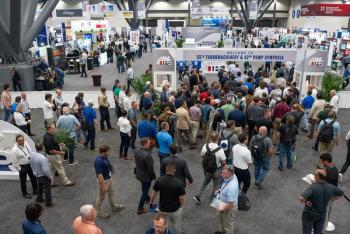
Industry conferences and technical societies are increasingly featuring women as keynote speakers, session chairs, and panelists. This visibility helps challenge outdated perceptions about who belongs in turbomachinery and provides role models for younger engineers entering the field. Events like Turbo Expo and its "Celebrating Women in Turbomachinery" dinner are vital in addressing the lack of women in the industry by providing platforms for networking, shared experiences, and fostering a sense of community, thereby empowering women and building essential support systems.
Professional recognition has also grown. Women are receiving awards for technical excellence and leadership from engineering societies and industry groups. These honors highlight their contributions while reinforcing the message that turbomachinery excellence is not limited by gender.
Efforts to increase women’s participation in turbomachinery often begin well before the workplace. Universities and STEM outreach programs are encouraging girls and young women to pursue engineering degrees, including mechanical, aerospace, and energy engineering programs that feed into turbomachinery careers. At the university level, professional societies provide early exposure to turbomachinery topics. Hands-on labs, internships and industry-sponsored projects help students gain practical experience and build professional networks.
Within industry, companies are launching initiatives aimed at recruiting, retaining, and advancing women engineers. These programs include mentorship and sponsorship networks, leadership development tracks, flexible work arrangements, and targeted recruitment efforts at universities and career fairs.
Professional organizations also play a key role. Groups such as engineering societies, turbomachinery associations, and women-in-STEM organizations host programs designed to support women’s careers. These platforms allow women to share technical knowledge, discuss career challenges, and build cross-company connections. Some examples include:
Despite progress, women remain underrepresented in turbomachinery, particularly in senior technical and executive roles. Challenges include a limited pipeline of female engineering graduates, unconscious bias in hiring and promotion, and workplace cultures that have not always been inclusive.
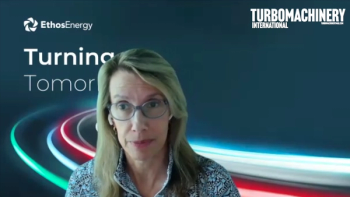
“The biggest issue for women in turbomachinery is the lack of role models,” said Susan Scofield, VP of Business Operations for North America, Siemens Energy. “We see fantastic women in the industry, and they're definitely present, but not enough of them exist. From the OEM perspective, statistics show that men and women join companies like Siemens Energy, GE, and Mitsubishi around the same age, typically around 21 to 23 years old. However, seven or eight years into their careers, when they're gaining enough experience to become first-time managers or team leads, they leave companies like ours. The question has always been why. One of the things we've uncovered at Siemens Energy is that there's simply not enough role models in our specific industry, and we need to continue fostering and promoting that.”
Retention is another concern. Some women leave the field mid-career due to a lack of advancement opportunities, insufficient mentorship, or difficulty balancing demanding project schedules with family responsibilities. Addressing these issues requires sustained commitment from employers and industry leaders.
Companies are increasingly recognizing that inclusion is not only a social issue but also a business imperative. Diverse teams have been shown to improve problem-solving, innovation, and decision-making—qualities that are essential as turbomachinery systems become more complex and operate under tighter performance and environmental constraints.
“Going into it, sometimes you fall into a great role model—a great mentor who gives you that boost of courage or just shows you what the future possibility is like,” said Scofield. “Other times, you have to be intentional around it. We have great opportunities with things like the ASME mentoring program and the Young Student Advisory Committee, which promotes what jobs and careers could look like in turbomachinery. And then sometimes you get lucky with professors like Jackie O'Connor at Penn State, who are just fantastic and do awesome work.”
Efforts to create inclusive workplaces include bias-awareness training, transparent promotion criteria, and accountability measures for diversity goals. Some organizations are also re-examining job descriptions and performance metrics to ensure they do not unintentionally discourage qualified candidates.
Industry leaders and educators broadly agree that sustaining progress will require long-term commitment. Expanding the pipeline of women entering turbomachinery means continued investment in STEM education, internships, and early-career support. Retaining talent requires inclusive cultures, clear advancement pathways, and recognition of diverse contributions.
“You get a chance to showcase what you've learned and build a bridge into an industry of what the future possibilities could be like for your own career,” added Scofield. “So, building these networks in the places that do exist—there are places that exist with a lot of great opportunity—is a key to helping the next generation of women and men be fantastic in the turbomachinery industry.”
As turbomachinery evolves to meet new energy and industrial demands, the sector’s ability to attract and retain skilled engineers will be critical. Women’s growing involvement represents both an opportunity and a necessity for an industry facing workforce constraints and technological transformation.
While gender parity in turbomachinery remains a work in progress, the trajectory is clear. Women are contributing across design, research, operations, and leadership, supported by programs that aim to make the field more accessible and inclusive. Their expanding role is shaping not only the future of turbomachinery but also the broader energy systems it supports.