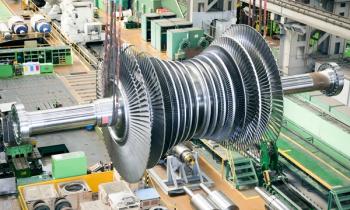
Denver-based American Supercritical has come out of stealth with $8 million in pre-seed funding to commercialize factory-built supercritical carbon dioxide (sCO2) power blocks. The units are designed to recover exhaust heat from gas turbines already in operation and turn it into electricity.1
The company is focusing first on simple cycle installations. Those units have taken on much of the recent growth in U.S. power demand from data centers, electrification and onshored manufacturing, but they lose a large share of their fuel energy as exhaust heat.1
Key Facts
- Company: American Supercritical, Denver
- Technology: sCO2 bottoming cycle power block
- Use: exhaust heat recovery on gas turbines
- Funding: $8 million pre-seed, led by Silent Ventures
- Claimed output gain: up to 50%, no added fuel
- Claimed footprint: one-tenth of a steam system
- Claimed U.S. fleet: about 140 GW of small turbines
- Status: pre-commercial; no field data released
- Site: 25,000 sq ft test and production facility
"Our first goal is to make wasteful simple cycle gas turbine installations obsolete," said Simon Shuham, co-founder and chief executive, in a press release. "Our sCO2 power block converts any gas turbine into a combined cycle plant. We upgrade turbines running today instead of replacing them."
Silent Ventures led the round. Riot Ventures, Harpoon, Reveille VC, Hillwood, Mana Ventures, Climate Capital, Alumni Ventures and several angel investors also participated.1
What does an sCO2 power block add to a simple cycle gas turbine?
The system mounts at the turbine exhaust and acts as a bottoming cycle. In a conventional combined cycle plant, a heat recovery steam generator and steam turbine perform that role.
American Supercritical says its unit can raise output by up to 50% without additional fuel, turbine modifications or re-permitting. The company also says the package is about one-tenth the size of a comparable steam system.1
These are company projections. The announcement did not include test results, a pilot site, or a delivery schedule.
The company estimates that about 140 gigawatts of small gas turbine capacity runs in the U.S., representing tens of gigawatts of recoverable output. It also estimates that converting that fleet would avoid roughly 20 million tons of carbon dioxide a year, or about 10% of the natural gas sector's emissions.1
Neither figure has been independently verified.
Why have power developers relied on simple cycle gas turbines?
Speed to capacity has driven much of the recent turbine demand. Combined cycle plants still account for most U.S. natural gas-fired generating capacity.