The Port of Victoria project would be only the second U.S. project to pursue NRC construction licensing for the GE Vernova Hitachi Nuclear Energy boiling water SMR design.
Baker Hughes wins CP2 LNG expansion order, delivering six SMR liquefaction blocks and compressors to scale U.S. Gulf Coast exports.
Baker Hughes has secured a major equipment order from Venture Global LNG to supply liquefaction technology for the CP2 LNG expansion project in Louisiana, the company announced July 27.¹ The order, booked in the second quarter of 2026, covers six liquefaction blocks comprising a total of 12 liquefaction modules, which doubles the scope of Baker Hughes' existing contribution to the CP2 facility.
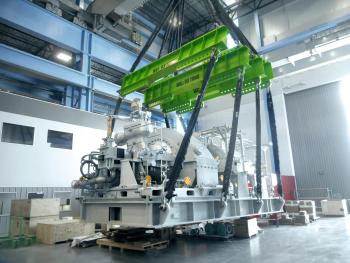
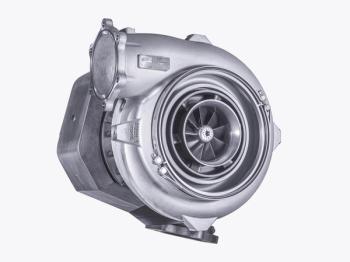
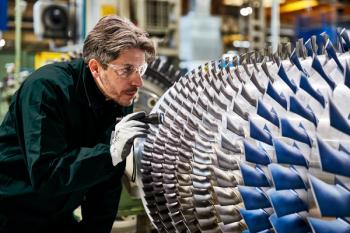
Each of the six liquefaction blocks is built around two single mixed-refrigerant (SMR) liquefaction modules, paired with related compression trains, cold boxes, air coolers, and integrated control systems.¹ Central to each train is Baker Hughes' advanced centrifugal compressor technology, which has become a cornerstone of the company's modular LNG offering.
The SMR liquefaction process is widely favored in modular LNG configurations for its mechanical simplicity relative to cascade or mixed-fluid cascade cycles, requiring fewer compression stages and enabling a more compact equipment footprint. This architecture is well suited to the kind of large-scale, train-replication strategy that Venture Global has employed across its Gulf Coast developments.
The order was made under the companies' established master equipment supply agreement, reinforcing the continuity and procurement efficiency that long-term framework contracts offer in large capital projects.¹
The CP2 LNG expansion order extends a supply relationship that Baker Hughes describes as spanning more than 100 million tonnes per annum (MTPA) of existing and planned production capacity across Venture Global's portfolio.¹ Baker Hughes has contributed comprehensive LNG systems to both the Calcasieu Pass and Plaquemines LNG facilities—two of the most closely watched U.S. LNG export projects in recent years.
Venture Global's CP2 LNG project represents the next phase of the developer's build-out on the Louisiana Gulf Coast. The modular, train-based approach that characterizes Venture Global's facilities allows for phased capacity additions, and the replication of standardized liquefaction blocks across multiple projects creates significant advantages in procurement, construction scheduling, and long-term maintenance planning—all of which are relevant considerations for rotating equipment engineers managing asset lifecycles across multi-train facilities.
"We are proud to continue providing the critical LNG technologies that enable Venture Global to deliver reliable, affordable and flexible energy needed to meet growing global demand," said Baker Hughes Chairman and CEO Lorenzo Simonelli. "Our continued collaboration reflects the strength of our partnership and our shared commitment to scaling modular LNG solutions that accelerate U.S. supply and support global energy security."¹
Venture Global CEO Mike Sabel echoed the sentiment: "Baker Hughes has been a trusted partner across our LNG developments, and we are pleased to extend this collaboration as we advance the next phase of CP2."¹
The U.S. remains the world's largest LNG exporter by volume, and Gulf Coast expansion projects continue to attract long-term offtake agreements from European and Asian buyers seeking supply diversification. Equipment orders of this scale—involving custom-engineered centrifugal compressor trains and integrated cryogenic systems—represent multi-year manufacturing commitments with significant implications for OEM production planning and the broader turbomachinery supply chain.²
For engineers and asset managers working in the LNG sector, this award highlights several trends worth tracking: