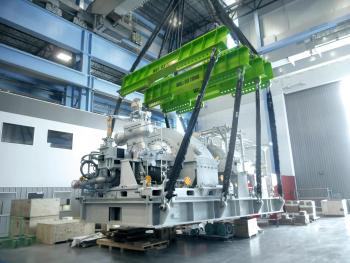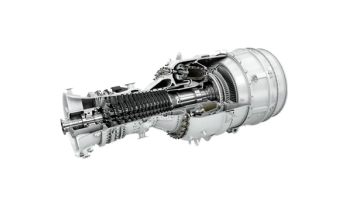

The motor-driven compressor package targets a 1,500 t/day green ammonia facility in India, with delivery in late 2027 and commissioning in 2028.
Version 2026.2 of Concepts NREC's Agile Engineering Design System adds LLM-connected tools for compressor design and documentation, a preliminary pump design environment, an AxCent link to Simcenter STAR-CCM+ and new MAX-PAC machining strategies.
Concepts NREC recently released version 2026.2 of its Agile Engineering Design System (AEDS). The integrated CAE and CAM platform for turbomachinery adds large language model (LLM)-connected tools for compressor design and technical documentation, expands preliminary pump design, links the company's AxCent design tool to Siemens' Simcenter STAR-CCM+, and adds new machining strategies for complex blade geometries.1, 2
The headline additions are two LLM-connected tools. The COMPAL MCP design server lets engineers use natural language through an LLM to set up compressor designs, change parameters, run calculations and review results, while COMPAL's physics-based solver still performs the engineering calculations. Thea, an engineering research assistant, gives LLMs structured access to Concepts NREC's CAE documentation so users can ask about parameters, modeling methods and software functions. Both tools work with commercial and locally hosted LLMs.1, 2
"AI is creating new opportunities for how engineers interact with design software," said Melissa Seib, senior product manager for CAE software at Concepts NREC. "The value comes from connecting those capabilities to trusted engineering tools."1
ParaScope, previously released in beta, supports preliminary pump sizing, including operating requirements, single- and multi-stage layouts, preliminary geometry and estimated performance maps. Designs can then move into the company's PUMPAL tool.1, 2 A new AxCent integration with Simcenter STAR-CCM+ transfers 3D geometry, meshing parameters and boundary conditions into the Siemens CFD tool, reducing manual model setup. Concepts NREC described the integration as part of a recently announced technical partnership with Siemens.1
Other analysis changes include CFD-calibrated loss modeling, which extracts spanwise loss profiles from 3D CFD results and automatically calibrates throughflow loss models to match, and expanded secondary leakage reporting on leakage flows, cavity pressures and thrust. In the ARMD rotordynamics tool, multi-level modeling lets engineers define shrink-fit sleeves, stepped hubs and concentric rings directly in the rotor model, with their mass and inertia accounted for in critical-speed, unbalance-response and stability analyses.1, 2
On the CAM side, MAX-PAC gains a distance-based fillet reduction strategy for controlling pass spacing on compound fillets, additional zig-zag finishing patterns, and corner feed-rate controls for shrouded components that reduce cutting speed in corners while keeping higher feed rates elsewhere where tool engagement allows.1, 2 "Programming complex turbomachinery components requires balancing machining efficiency with surface quality," said Ryan Lussier, senior product manager for CAM software at Concepts NREC.1
Active Agile Product Support members can obtain version 2026.2 by contacting Concepts NREC support. The company is also offering live demonstrations and trial licenses, and is hosting a series of technical webinars on the new features.1, 3
The release does not give pricing, name the LLMs the new tools work with, or describe how user data is handled when the tools are connected to commercial LLMs, although both tools are described as compatible with locally hosted models.1, 2 The update follows version 2026.1, which Turbomachinery International