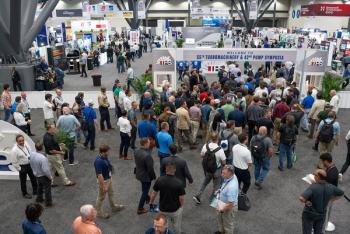
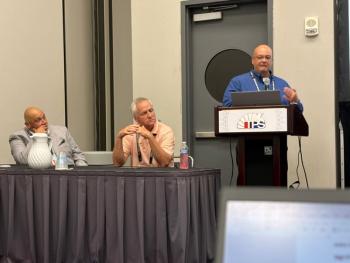
At the 2026 Turbomachinery and Pump Symposia, John Crane’s Brian Kalfrin explained why volatile natural gas liquids demand custom-engineered seals, from face material selection to installation and flush rates.
Jesse Garcia, manager of business development at Mitsubishi Chemical Advanced Materials, makes the case for rethinking what goes into a compressor’s labyrinth seals.
Sponsored by Mitsubishi Chemical Advanced Materials
Jesse Garcia, manager of business development at Mitsubishi Chemical Advanced Materials, discusses how polymer labyrinth seals can improve compressor performance and reliability. Garcia explains that polymer labyrinth seals offer tighter clearance capabilities than standard metallic seals. Those tighter clearances support efficiency, greater throughput, and smoother, more reliable operation of compressor equipment.
A central theme is what happens when a labyrinth seal experiences contact. According to Garcia, the metallic seals in use today develop a mushrooming effect on contact, resulting in a permanent loss in efficiency, while the teeth of a polymer seal return to their original dimension. He describes polymer seals as forgiving and self-lubricating, able to handle chemical compatibility and wear while remaining efficient throughout the compressor’s life cycle. Garcia also outlines what engineers should consider when selecting a seal material, including temperature, pressure, wear, and rotating speed, and notes that Mitsubishi shares dynamic modulus analysis and stress-strain curves with customers to help recommend the right material, backed by extensive testing that includes a flex modulus of more than 1 million.
Garcia closes by describing Mitsubishi’s approach to partnering with end customers: understanding their needs and goals, sharing technical expertise, and working toward the shared goal of extending equipment life. Engineers and operators responsible for compressor equipment will come away with a clearer understanding of how seal material choice affects efficiency, reliability, and performance over the life of their machinery.