
The company raised $8 million to commercialize factory-built supercritical CO₂ systems designed to recover exhaust heat from simple-cycle gas turbines.
Entergy and MHI Group have formalized an MOU pairing M501JAC gas turbines with carbon capture technology to cut CCS costs by 50% across Gulf South power sites.
Entergy and MHI Group have formalized a memorandum of understanding (MOU) targeting a 50% reduction in overall carbon capture and storage (CCS) costs, positioning the partnership as one of the industry's early movers in deploying integrated gas turbine combined cycle (GTCC) and CCS technology at commercial scale.¹
The agreement brings together Mitsubishi Heavy Industries America (MHIA) and Mitsubishi Power Americas—both operating under the MHI Group umbrella—to deliver a standardized, integrated solution combining M501JAC gas turbines with MHIA's carbon capture technology. The collaboration builds on an established GTCC program already underway between Entergy and Mitsubishi Power Americas.¹
The MOU commits the parties to developing a near-term roadmap focused on improving project economics for CCS deployments at Entergy's power generation sites across Arkansas, Louisiana, Mississippi, and Texas. The stated goal is a 50% reduction in overall CCS costs—a threshold that, if achieved, would represent a significant step toward making post-combustion carbon capture commercially viable without heavy reliance on policy incentives alone.¹
MHI Group's integrated offering is designed to reduce the complexity and cost typically associated with assembling CCS projects from disparate vendors. By packaging gas turbine supply and carbon capture technology under a single corporate group, MHI aims to deliver repeatable project execution, streamlined engineering interfaces, and improved economics through standardization.¹
A key differentiator for this collaboration is Entergy's geographic positioning. The company's operational footprint in the U.S. Gulf South places it in proximity to the largest existing CO₂ pipeline network in the United States, while the region's subsurface geology, characterized by deep saline aquifers and depleted hydrocarbon reservoirs, is considered among the most favorable in the country for permanent geological CO₂ storage.¹
This infrastructure and geological advantage reduces a critical risk factor that has historically complicated large-scale CCS project development: the cost and logistics of CO₂ transport and injection. For turbomachinery professionals evaluating CCS integration with combined cycle assets, this context is significant, as site-specific storage logistics can represent a substantial share of total project cost and schedule risk.
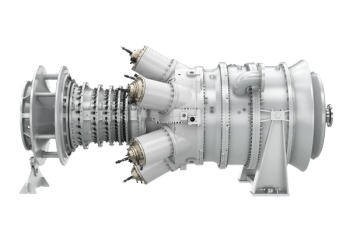
At the core of MHI Group's integrated solution is the M501JAC gas turbine, Mitsubishi Power's advanced J-Series air-cooled machine. The J-Series platform has accumulated commercial operating hours across multiple combined cycle deployments and is recognized for high efficiency in the 1,600°C firing temperature class.² Pairing a high-efficiency GTCC with post-combustion capture is a strategy that benefits from higher exhaust energy availability, which can be leveraged to partially offset the parasitic load penalty associated with solvent regeneration in amine-based capture systems.
Both parties have emphasized the importance of standardization and repeatability. Bill Newsom, President and CEO of Mitsubishi Power Americas, described the goal as creating "a repeatable model that can accelerate the commercialization of integrated gas turbine and CCS solutions."¹ This framing signals an intent to move beyond one-off demonstration projects toward a scalable deployment approach—a critical distinction for CCS technology, which has historically struggled to transition from pilot to commercial scale.
Yusuke Yoshida, EVP and President of the Engineered Systems Division at MHIA, reinforced that the collaboration is designed to deliver "commercially viable decarbonization solutions to customers across the Americas."¹
For operators and project developers in the rotating equipment space, the MOU signals increasing convergence between gas turbine OEM strategies and carbon capture technology deployment—a trend with direct implications for long-term asset planning, capital project scoping, and decarbonization roadmaps for natural gas-fired generation fleets.