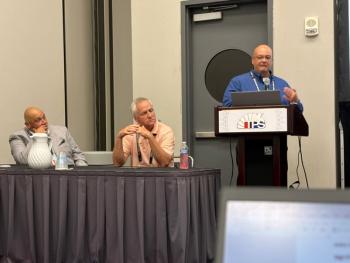
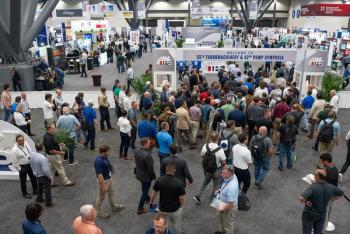
At the 2026 Turbomachinery and Pump Symposia, Opportune’s Dan Romito warned that grid constraints and a five-year gas turbine backlog are pushing AI data centers toward on-site power, while colleagues honored the legacy of the late Dara Childs.
The HydroPoLEn project has designed and successfully validated a combustion process, mechanical components, and parts for hydrogen-based propulsion in the maritime sector.
Everllence recently upgraded a
“With HydroPoLEn, we are taking another major step forward toward climate‑neutral maritime transportation,” said Dr. Alexander Knafl, SVP of R&D Four-Stroke, Everllence. “Our hydrogen engine demonstrates that engineering is a key element for sustainable, carbon-free propulsion, providing the foundation for the next generation of marine mobility. We are proud to drive forward solutions that unite environmental responsibility with industrial innovation.”
The HydroPoLEn project is creating sustainable propulsion solutions for the maritime sector, addressing the immediate need for environmentally friendly technologies in global shipping. Currently, the project has designed and successfully validated a combustion process, mechanical components, and parts specifically for hydrogen-based propulsion. The newly developed combustion process allows a significant increase in power density under hydrogen operation.
“We are still at an early stage in terms of developing a complete propulsion solution for the market, but this news augurs well for the future,” said Dr. Cornelius Wagner, HydroPoLEn Project Manager, Everllence. “Hydrogen poses significant challenges for engine operation and requires optimal adaption of safety systems and components for it to reach maximum potential. With these key challenges now addressed, hydrogen is moving closer to becoming a long-term solution for the de-fossilization of passenger ships.”
Everllence is partnering with industry leaders and research institutes, including WTZ GmbH, NMA at the Technical University of Munich, Tenneco, and Carnival Maritime acting as associated partner. The project is funded by the German Federal Ministry for Economic Affairs and Energy within the framework of its Maritime Research Program. This development highlights a commitment to sustainability and greener propulsion systems in maritime applications.
“In the race for future propulsion technologies in the maritime sector, hydrogen has a decisive role to play alongside ammonia and methanol,” said Dr. Matthias Auer, Head of Performance & Emissions, Four-Stroke R&D at Everllence. “Since no single technology will likely prove optimal for all applications in the foreseeable future, companies must remain flexible and evaluate all options. Hydrogen will be an essential consideration in this context.”
Earlier this month, MODEC contracted Everllence to supply
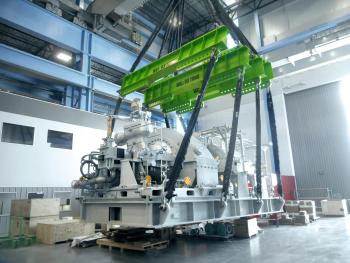
These compressors will be electrically driven and, upon startup, will help maximize the quantity and efficiency of gas production from the Hammerhead field. The low-pressure gas compressors will feature variable frequency drives, while the export gas compressors will leverage fixed-speed drives. Everllence will design, manufacture, and test the compressors at its facility in Zurich, Switzerland.
The FPSO vessel will be anchored approximately 200 km offshore at a water depth of around 1,025 meters, with a planned initial production capacity of 150,000 barrels of oil per day and total installed storage capacity of 1.5 million barrels of oil. It’s the seventh FPSO project developed by ExxonMobil Guyana, the operator of the Hammerhead field. First production is expected in 2029.