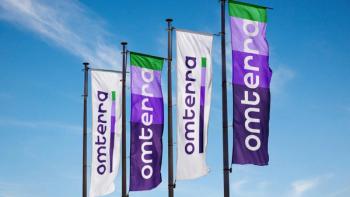
Siemens Energy is rebranding as Omterra, unifying its gas turbine, compressor, and Siemens Gamesa wind portfolios under one corporate identity.
As Europe leans further into renewable integration, gas turbines and rotating equipment are being redefined by their ability to deliver fast, flexible, and dependable dispatchable power.
Europe's energy transition is often described as a race toward wind, solar, storage, and electrification, but behind that headline story sits a harder question: what keeps the system stable when the wind drops, the sun fades, and demand refuses to wait?
That is where turbomachinery still earns its place. Gas turbines are no longer defined mainly by how much power they can produce over long, steady runs. Their future role is increasingly about something more demanding: delivering fast, flexible, and dependable capacity in a power system dominated by variable renewables. As renewable penetration rises, conventional thermal plants are expected to run for fewer hours overall, while the system still depends on them for increasingly higher levels of firm, dispatchable capacity during periods of stress.
Recent ENTSO-E Ten-Year Network Development Plan scenarios point in that direction: expected running hours for thermal generation decline, but adequacy still requires substantial available capacity to cover residual demand, low-renewable periods, and system balancing needs. Terna's latest Adequacy Assessment reinforces the same message for Italy, warning that most thermal capacity could become economically at risk in the absence of capacity remuneration mechanisms or equivalent arrangements leading to high adequacy risks. In other words, the challenge is no longer only paying for megawatt-hours produced but ensuring that enough reliable megawatts remain available when they are most needed.
This shift changes the innovation agenda. In the past, the industry could focus heavily on efficiency at a fixed operating point; now, the challenge is broader and more practical. Operators need machines that can start quickly, ramp hard, cycle frequently, switch fuels safely, and still remain available when the system calls.
That reality puts maintenance and durability at the center of the conversation. For many operators, the problem is no longer just performance on paper, but performance over time, under pressure, and with real-world constraints such as aging fleets, long spare-parts lead times, and tighter outage windows. In that environment, repairability becomes strategic.
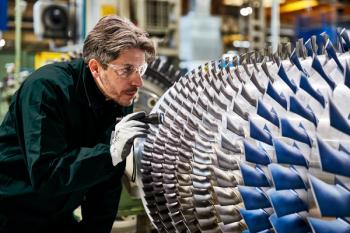
Research priorities are therefore moving closer to the shop floor. Better inspection methods, stronger non-destructive evaluation, smarter borescope interpretation, and advanced repair techniques for high-temperature parts can all help extend asset life and reduce forced outages. Materials and coatings matter just as much, especially as machines move away from baseload duty and into more aggressive cycling regimes.
Operational optimization is changing too. The industry is learning that the most valuable machine may not be the one with the best headline efficiency, but the one that stays clean, stable, and responsive across a wide operating envelope. Part-load performance, low-emissions flexibility, rapid starts, and reliable overfiring are becoming defining features of transition-ready assets.
Digitalization could accelerate that shift, but only if it solves practical problems instead of adding new ones. Predictive maintenance, autonomous operation, and data-driven lifting models all hold promise, yet adoption still depends on trust in interoperability, data governance, and cybersecurity. The digital layer has to make operation simpler, not more fragile.
The biggest opportunities may lie beyond the turbine itself. Hybrid plants that pair gas turbines with batteries, along with better waste-heat recovery and cogeneration strategies, can improve flexibility while creating new revenue streams from ancillary services. In distributed systems, success will depend not only on hardware, but also on scalable controls, interoperable platforms, and market rules that reward responsiveness.
Decarbonization adds another level of complexity. Hydrogen remains one of the most discussed pathways, but it brings real engineering challenges, from flashback and combustion instability to NOx control, safety, and durability. Carbon capture offers another route, yet it raises its own questions around integration, cycling behavior, plant footprint, and cost.
That is why no single solution is likely to dominate across every application. Some assets may be better suited to hydrogen or low-carbon fuels, especially where fast response and lower running hours matter most. Others may lean toward carbon capture where long-duration dispatchability is the priority. The smarter approach is not ideological; it is situational.
What emerges is a clearer picture of turbomachinery's next chapter. Its value in a decarbonizing Europe will depend less on legacy assumptions and more on its ability to adapt, integrate, and stay reliable under new operating conditions. The machines that remain relevant will be the ones designed not just for power, but for flexibility, resilience, and transition credibility.
Giuseppe Tilocca holds MSc degrees in Aerospace Engineering from the Polytechnic University of Turin and in Thermal Power from Cranfield University, as well as a PhD in Energy Engineering focused on gas turbine commercialization pathways for microgeneration. His background spans turbomachinery aerodynamic design, smart design tools, and innovation in turbomachinery-based energy systems. At ETN Global, he coordinates and supports working groups on integrated energy systems, digital solutions, gas turbine life assessment and extension, and air filtration.