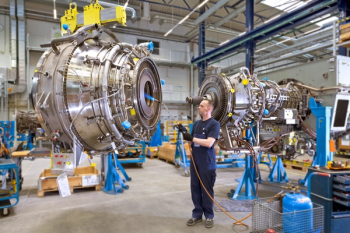
Siemens Energy is rebranding as Omterra, unifying its gas turbine, compressor, and Siemens Gamesa wind portfolios under one corporate identity.
Industry leaders converged as the 2026 event kicked off with a keynote address that put global energy investment, supply challenges, and the evolving offshore technology landscape in focus.
The world’s largest offshore energy technology conference officially opened at NRG Park in Houston, drawing thousands of engineers, executives, technical experts, and policymakers from across the energy sector. The theme for the 2026 program — “Steering Offshore Energy Innovation into the Future” — set the tone for a week packed with sessions spanning traditional offshore oil and gas technologies, renewables integration, supply chain optimization, and sustainability.
The highlight of the morning was the keynote address by Dr. Mohamed Irfaan Ali, President of the Co-operative Republic of Guyana, who delivered the conference’s Opening Address in front of a packed hall of industry professionals. Ali’s remarks centered on the global energy landscape, underscoring what he described as a widening gap between energy supply and demand, and the implications for the offshore energy sector. Drawing attention to recent geopolitical disruptions—including the ongoing conflict in Iran and disruptions in the Strait of Hormuz—Ali stressed that current energy investment levels are insufficient to sustain rising global demand for oil and gas, even as renewables expand.
He framed the challenge not as a simple energy transition, but as an imperative to achieve what he termed an “energy balance” — a calibrated approach that recognizes the continued role of fossil fuels, even as renewable and low-carbon technologies mature. Ali also highlighted the increasingly strategic role of critical minerals, which are essential for electrification technologies but concentrated in a small number of geographies.
Guyana’s placement on the Opening General Session agenda reflects the country’s rapid emergence as an influential player in global energy markets. Since first producing offshore oil in 2019, Guyana has attracted significant exploration and production activity, and its leadership’s presence at OTC underscores a broader shift in how offshore resources and technologies are shaping global supply dynamics.
Participation at OTC remains robust, with organizers reporting more than 30,000 energy professionals expected over the conference’s four days, alongside an extensive exhibit hall featuring hundreds of exhibitors from more than 100 countries. The event’s technical program features upwards of 360 presentations covering digital transformation, offshore electrification, supply chain resilience, and sustainability trends.
Monday’s sessions following the opening keynote began exploring many of those themes, from the role of digital technologies in offshore operations to discussions about how automation and analytics can shape future well construction and asset management strategies. While the opening address highlighted broader energy policy and investment issues, subsequent technical sessions emphasized operational efficiency, safety, and long-term asset optimization—areas of particular interest to turbomachinery professionals.
For attendees with a technical focus, the convergence of energy policy and engineering practice was a persistent undercurrent. The emphasis on balancing investment between existing offshore hydrocarbon infrastructure and emerging energy technologies—particularly offshore wind and other renewable marine resources—suggested a future where turbomachinery expertise will continue to be pivotal, whether in traditional oil and gas applications or in support of electrified offshore platforms and integrated supply systems.
The OTC’s Opening General Session also set the stage for conversations about supply chain integration—an increasingly critical topic given recent volatility in global logistics networks and raw material markets. Upcoming panels and presentations will explore how digital systems, data-driven supply networks, and sustainability criteria can unlock operational performance while reducing environmental and financial risk.
For industry veterans, the session underscored long-standing challenges, including how to sustain investment levels needed to maintain offshore production capacity into the next decade, while also navigating an energy ecosystem in flux. For younger engineers and emerging leaders, Ali’s emphasis on energy sufficiency and balance provided a framing that acknowledges the complexity of transitioning energy systems while continuing to meet near-term global demand.
As the conference progresses, OTC 2026 is expected to feature in-depth discussions on subsea processing, CCUS, offshore electrification, and lifecycle optimization—issues that resonate with professionals focused on turbomachinery performance and reliability. With thousands of participants, hundreds of technical sessions, and significant global representation, the Opening General Session provided a wide-angle view of where offshore energy stands today, and where it is headed, reaffirming the continuing relevance of offshore technologies in both traditional and emerging energy sectors.