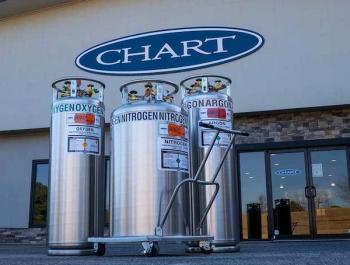
Baker Hughes completes its Chart Industries acquisition, forming a new industrial segment with expanded capabilities in LNG, hydrogen, and thermal management.
The demonstration’s outcome allows for the injection of supercritical CO2 into deep geological formations, like deep saline aquifers, to advance commercial CCUS work.
IHI Corp. and IHI Rotating Machinery Engineering (IRM) executed a successful demonstration test for a new
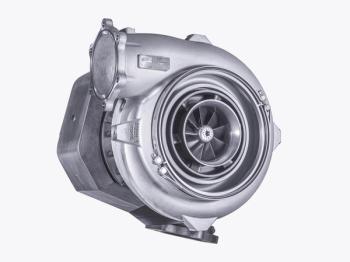
A successful outcome enables the injection of supercritical CO2 into deep geological formations, like deep saline aquifers, to advance commercial carbon capture, utilization, and storage (CCUS) and progress industrial decarbonization. Unlike single-shaft, multi-stage compressors where all impellers rotate at the same speed, the geared architecture enables stage-by-stage optimization of impeller speeds, improving energy efficiency and space efficiency.
With this milestone demonstration, IHI and IRM will expand the application of their compression technologies to processes with high decarbonization potential, establish core capabilities across the CCUS value chain, and further improve system reliability. The IHI Group will help reduce environmental impact and expand decarbonization-based infrastructure, contributing to a sustainable and low-carbon society.
IRM’s process gas compressor portfolio includes both centrifugal and reciprocating compressors, which are manufactured at its Yokohama Factory in Japan. IHI leverages high-speed, high-efficiency centrifugal technologies and cryogenic gas processing expertise to deliver performance and reliability across various industrial processes, including air separation units and LNG receiving terminals.
At the 2025 Cogeneration Award, IHI Corp. and IHI Power Systems received the Chairman’s Award in the Technology Development Category for a project titled: Development of the 2 MW-Class
IHI, Tohoku University, and the National Institute of Advanced Industrial Science and Technology successfully developed and demonstrated CO2-free power generation using a gas turbine fueled completely by liquid ammonia in 2022. This portion of IHI’s program fell under the Green Innovation Fund and the New Energy and Industrial Technology Development Organization.
Starting in July 2024, IHI executed long-term durability testing at its Aioi Works in Aioi City, Japan, attempting to validate social implementation. The testing confirmed that IHI’s system achieved the planned power output and sufficiently suppressed N2O and NOx emissions. It also demonstrated durability performance comparable to conventional natural gas operation.
Electricity generated during the testing phase was recirculated and used on-site at Aioi Works. Also, by firing low-carbon ammonia as fuel, the project provided decarbonization value and accelerated decarbonization initiatives for Expo 2025 in Osaka, Kansai. Building on these project results, IHI is also progressing efforts toward
Among decarbonized fuels, IHI is prioritizing green ammonia and working to establish the complete value chain—from production, storage, and transportation to utilization—to validate and advance social implementation.