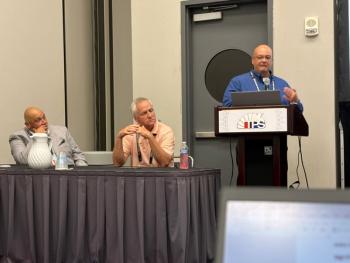
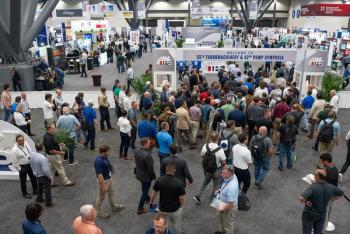
At the 2026 Turbomachinery and Pump Symposia, Opportune’s Dan Romito warned that grid constraints and a five-year gas turbine backlog are pushing AI data centers toward on-site power, while colleagues honored the legacy of the late Dara Childs.
The floating storage and regasification unit will begin executing LNG regasification services at the LNG terminal in the Port of Pepillo Salcedo in September 2025.
New Fortress Energy’s (NFE) subsidiary signed a three-year charter agreement with Energía 2000 S.A. (Energía) for the Energos Freeze floating storage and regasification unit (FSRU). Per the charter, the 125,000 m3 FSRU will be deployed at Energía’s LNG import terminal in the Port of Pepillo Salcedo, Dominican Republic.
“This charter agreement reflects our continued commitment to expanding energy access in the Caribbean through strategic partnerships and globally installed LNG infrastructure,” said Wes Edens, Chairman and CEO of New Fortress Energy.
Beginning operations in September 2025, the FSRU Energos Freeze will provide the necessary LNG regasification services to meet power generation and industrial energy demand in the increasingly energy-hungry Caribbean.
Also, following
“This important authorization cements NFE’s position as a global vertically integrated gas-to-power company and enhances the marketability of our FLNG 1 asset,” said Edens. “NFE is now able to freely supply cheaper and cleaner natural gas to underserved markets across the world and further our goal of accelerating the world’s energy transition.”
In July 2024,
Miami Facility
At the beginning of July 2024, NFE signed a definitive agreement with a U.S. middle-market infrastructure fund to sell its small-scale
The Miami facility has one liquefaction train capable of producing 8,300 MMBtu of LNG per day and three LNG storage tanks with an approximate total capacity of 1,000 m3. It also contains two separate LNG transfer areas for truck and rail service and is authorized to export up to 60,000 tons per year of LNG to FTA and non-FTA countries for a 20-year term. The LNG export term began on February 5, 2016.
Terminal Gas Sul
In March 2024, NFE’s
In addition to the Energos Winter FSRU, the terminal also includes a 33 km, 20-inch pipeline which connects the facility to the inland Brasileira Gasoduto Bolivia-Brasil pipeline. The terminal is connected via pipeline to the Brazilian gas market, including more than 3.5 GW of power that does not have long-term gas supply contracts. TGS is also connected to more than 300 TBtu of industrial and residential gas consumers in southern Brazil.