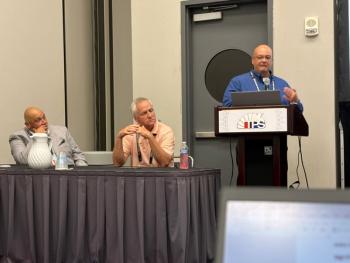
At the 2026 Turbomachinery and Pump Symposia, Opportune’s Dan Romito warned that grid constraints and a five-year gas turbine backlog are pushing AI data centers toward on-site power, while colleagues honored the legacy of the late Dara Childs.
The company’s aftermarket combustor technology, FlameSheet and the MicroMixer, successfully demonstrated low NOx emissions and reliable flame stabilization with cracked ammonia.
Gas turbines remain a central pillar of the U.S. power generation fleet, and emerging combustion technologies are expanding their role across decarbonization, grid balancing, and primary generation applications. PSM, a Hanwha company and provider of aftermarket gas turbine engineering services and solutions, highlighted its own combustor technology at
Amir Shoraka, Global Product Manager for Clean Energy Solutions at PSM, led the session and offered a comprehensive update on its FlameSheet combustor, including the technology’s combustion testing results with cracked ammonia; however, he began with some statistics. According to Shoraka, gas turbines account for roughly 580 GW of installed capacity in the United States and represent approximately 40% of total generation capacity. Aftermarket engineering solutions are enabling these fleets to accommodate low-carbon fuels while maintaining reliability, dispatchability, and operational flexibility.
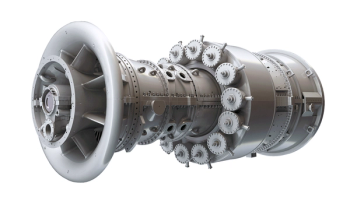
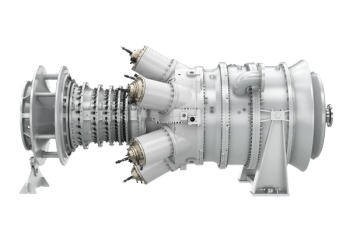
PSM has developed its FlameSheet combustor to address fuel flexibility challenges. The combustor uses advanced radial flame staging with an aerodynamic trapped vortex design to achieve a wide stability margin. Shoraka said the system is scalable and retrofittable across multiple engine frames, including E-, F- and B-class turbines, and is compatible with many Mitsubishi and GE Vernova units. It incorporates robust fuel-air mixing technology that supports stable combustion while maintaining a compact footprint. Additionally, improved mixing enables higher stability and allows the combustor to operate on hydrogen blends of up to 60% by volume in E-class turbines.
The session also focused on ammonia as a potential low-carbon fuel pathway. Shoraka explained that cracked ammonia consists of hydrogen diluted with nitrogen after ammonia is split in a cracking process. Ammonia infrastructure for transport and storage is already widely available, and liquid ammonia has about 50% higher volumetric energy density than liquid hydrogen, making it attractive from a logistics perspective.
However, direct ammonia combustion presents challenges, including very high NOx emissions that can exceed 1,000 ppm. Shoraka said acceptable NOx levels can only be achieved within a narrow Rich-Quench-Lean operating window. Using ammonia crackers to convert ammonia into hydrogen and nitrogen offers an alternative pathway with improved combustion control.
PSM conducted high-pressure rig testing with cracked ammonia at the German Aerospace Center, or DLR, to validate FlameSheet performance under engine-representative conditions. The testing included multi-fuel operation, combustion performance characterization, and evaluation across the full operating envelope. Prior to testing, PSM recognized that FlameSheet’s gas holes required resizing for cracked ammonia; therefore, a MicroMixer design was developed. The updated technology demonstrated reliable ignition and flame stabilization.
During startup, the MicroMixer achieved single-digit NOx emissions with low combustion dynamics and no flashback or lean blowout. Cracked ammonia enabled direct flame stabilization, allowing the system to bypass intermediate operating modes typically required for natural gas - main fuel flow was able to ramp from Mode 2 to Mode 4. At Mode 4, the combustor demonstrated stable operation at both part load and baseload, achieving NOx emissions below 3 ppm without flashback. The presence of nitrogen in cracked ammonia helped reduce flame temperature, contributing to lower emissions.
Testing also showed that the combustor could transition from 100% natural gas to 100% cracked ammonia while maintaining stability. Gas injection holes were upsized threefold to accommodate cracked ammonia fuel properties. Shoraka said direct cracked ammonia combustion eliminates the need for hydrogen purification, reducing capital costs. From an operating cost perspective, the system uses gas turbine waste heat to power the ammonia cracking process, improving overall efficiency.
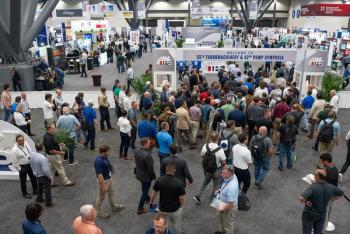
The presentation highlighted how advanced combustor designs and alternative fuel strategies could allow existing gas turbine fleets to support decarbonization goals while preserving grid reliability, a key focus of discussions at POWERGEN 2026.