
Siemens Energy is rebranding as Omterra, unifying its gas turbine, compressor, and Siemens Gamesa wind portfolios under one corporate identity.
The keynote highlighted how data center growth, rising electricity loads, and infrastructure constraints are accelerating changes across generation, transmission, and resource planning.
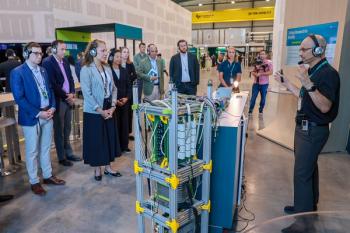
San Antonio, TX, welcomed attendees and exhibitors from the energy and power generation industries at the Henry B. Gonzalez Convention Center as POWERGEN International 2026 kicked off. Ahsan Yousufzai, Global Director of Energy at NVIDIA, moderated the Opening Keynote, which addressed the rapid expansion of AI, data center development, and how these factors are reshaping power markets, infrastructure planning, and generation strategies in the United States.
Speakers emphasized that AI is emerging as a major economic growth engine, but one that carries unprecedented energy and infrastructure demands. Meeting those demands will require a coordinated buildout of generation, transmission, computing capacity, and applications, with electricity availability increasingly viewed as a competitive differentiator.
Rudy Garza, President and CEO of CPS Energy, said the pace of industry change is accelerating, driven by extremely high resource requirements tied to large new loads. He noted that utilities are facing growing pressure to ensure that major electricity users contribute fairly to grid costs in order to protect smaller customers. CPS Energy is currently evaluating about 50 large-load opportunities, reflecting the scale of demand growth now confronting utilities.
Garza highlighted the energy intensity of AI-driven applications, pointing to the rising electricity consumption associated with data generation and processing. As demand accelerates, utilities must balance economic development with system reliability and affordability, particularly during periods of grid stress.
Victor Suchodolski, CEO of Sargent & Lundy, said the power market is now largely being shaped by data center expansion, which is driving renewed interest in combined-cycle generation projects. Higher electricity demand and sustained load growth are contributing to an increase in gas-fired capacity additions, even as supply chain constraints persist. He noted that OEMs are struggling to keep pace with demand, with long lead times for gas turbines becoming a significant challenge.
Delays are no longer limited to major equipment, as smaller components such as generators and transformers are also experiencing extended delivery timelines. In response, power systems are increasingly being designed in unique and customized configurations to meet project requirements. Transmission development is also emerging as a bottleneck, with infrastructure expansion failing to keep pace with load growth in many regions, Suchodolski said. To address project complexity and execution challenges, engineering firms are expanding their workforces, with Sargent & Lundy increasing hiring to support growing demand.
Returning to the generation mix, Garza said meeting new load requirements will require the use of all available generation technologies, including nuclear power. He said small modular reactors are expected to play a larger role in the future than traditional large baseload nuclear plants, offering a more flexible approach to capacity additions. Garza also addressed regulatory considerations in Texas, noting that under state law, data centers are required to rely on their own resources and go offline from the grid during periods of constraint. That requirement is intended to preserve system reliability as large loads continue to connect.
Suchodolski said renewable energy is seeing renewed momentum in the near term, particularly battery energy storage systems, which are increasingly being deployed to support grid flexibility and reliability. He added that protecting and maintaining the existing generation fleet will be critical as demand rises, with plant upgrades and life extension projects playing a key role. In some cases, nuclear plant restarts could also contribute to meeting future electricity needs.
Transmission planning was a recurring theme, with Garza noting that the Electric Reliability Council of Texas is moving toward a 765-kilovolt transmission infrastructure to accommodate rapidly increasing loads. However, he cautioned that older power plants cannot be assumed to operate indefinitely. According to Garza, some aging units may face decommissioning due to reliability concerns, while the cost of keeping older facilities online continues to rise. Over the long term, he said, new generation projects may be necessary to ensure system stability and meet sustained growth in electricity demand.
The keynote underscored a central message echoed throughout the session: as AI-driven load growth accelerates, the power sector faces mounting pressure to deliver reliable, scalable, and timely energy solutions across generation, transmission, and infrastructure.