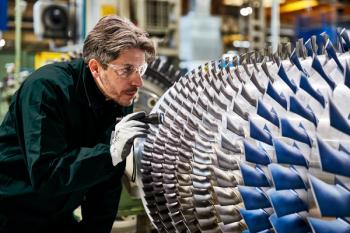
Record IET orders fuel Baker Hughes’ $37B backlog as LNG liquefaction and data-center power turbine demand accelerates, reshaping supply chains.
The compressor trains will perform two process duties—flash-gas compression and high-pressure gas injection—maintaining maximum production in Brazil’s Orca field.
Everllence was commissioned to supply five
“This major order highlights Everllence’s position as a trusted partner in the offshore industry,” said Holger Wörner, Head of Sales Upstream at Everllence. “Our compression systems deliver the reliability and efficiency FPSO projects demand, while helping operators move toward their long-term sustainability goals. At Everllence, we empower customers around the world to develop energy resources responsibly and efficiently.”
The compressor trains will perform two process duties—flash-gas compression and high-pressure gas injection—maintaining pressure and maximizing production flow and efficiency in the Orca field. The flash-gas compression units will be electrically driven, while the gas injection models will be driven by gas turbines from Solar Turbines. Everllence and Solar Turbines will closely coordinate across engineering, delivery, and lifecycle support duties.
“We’re delighted that MODEC is once again relying on our compression technology,” said Jens Hüren, Managing Director of Everllence Brazil. “FPSO developments place high demands on availability, execution reliability, and long-term support. Our experience in offshore compression, combined with close collaboration with partners such as Solar Turbines and the support of our local PrimeServ organization in Brazil, enables us to meet these requirements throughout the lifecycle of the Orca FPSO.”
FPSO Gato do Mato will be moored in the pre-salt region of the Santos Basin, approximately 200 km south of Rio de Janeiro at a water depth of around 2,000 meters. Once operational, the vessel will feature a production capacity of 120,000 barrels of oil and 360 million standard cubic feet of gas per day. The project is developed through a partnership among:
In December 2025, Everllence agreed to deliver 14 large-scale gas engines, totaling over 240 MW of combined output, to three new
Also, Everllence signed a contract with KAB Energy Holdings to deliver seven 18V51/60DF engines for a new gas-fired power plant on Labuan Island offshore Borneo. The plant will replace retiring assets, supply 120 MW for the local grid, and serve a rapidly growing manufacturing presence in the region. Commissioning is planned for year-end 2026, with KAB Energy Holdings executing engineering, procurement, and construction.
In October, MT Group contracted Everllence to deliver a 5-MW hermetically sealed