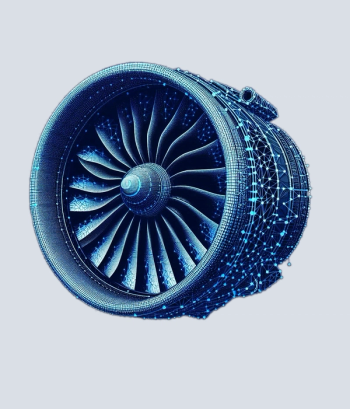
SoftInWay's AxSTREAM AI platform introduces pre-trained foundation models for turbomachinery design, promising faster feasibility assessment with under 3%...
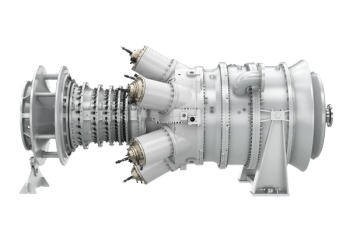
The M701 JAC gas turbine features a flexible operating profile and hydrogen co-firing capability, playing a critical role in stabilizing Qatar’s electricity power grid.
The Ras Abu Fontas Power Co.
Mitsubishi Power’s M701 JAC gas turbines feature a flexible operating profile and hydrogen co-firing capabilities, playing a critical role in stabilizing Qatar’s electricity power grid and supporting an ongoing shift toward sustainable, low-carbon power generation. This marks the first M701 JAC deployment in Qatar, integrating reliability, efficiency, and hydrogen readiness into domestic power infrastructure.
“KAHRAMAA, through the adoption of the Facility E project utilizing hydrogen-ready M701 JAC gas turbines supplied by Mitsubishi Power, represents a pivotal step in ensuring grid stability,” said Abdulla Bin Ali Al-Theyab, President of KAHRAMAA. “This helps strengthen Qatar's electricity energy security, underpins the nation's commitment to delivering sustainable and reliable electricity energy to its citizens, residents, and industrial sectors, meets future electricity needs, and maintains high levels of reliability and performance required by Qatar National Vision 2030.”
Additionally, Mitsubishi Power signed a long-term service agreement to supply parts, repairs, and services for Facility E IWPP, ensuring high availability and sustained reliability and performance throughout the project’s operational life. The Facility E project is expected to start operations in 2028, aligning with Qatar’s National Vision 2030: a decarbonization strategy to reduce carbon emissions and increase reliance on cleaner energy sources.
Facility E IWPP is located in the Ras Abu Fontas region, approximately 25 km south of Doha, and will serve as a critical infrastructure asset for Qatar. It will generate a combined 2.4 GW of electricity—approximately 20% of Qatar’s national grid capacity—and provide 495,000 tons per day of desalinated water.
“Qatar has been a key partner for Mitsubishi Power, and we are honored to play a role in supporting the country's energy goals,” said Khalid Salem, President of Middle East & North Africa, Mitsubishi Power. “Qatar's continued growth and economic development are intrinsically tied to its energy infrastructure. The Facility E IWPP project is a step in addressing Qatar's rising energy demand while ensuring the stability and resilience of its power grid. Mitsubishi Power's hydrogen-ready M701 JAC gas turbines will provide Qatar with highly efficient, reliable, and flexible power generation solutions that synchronize with renewable energy sources.”
In early January 2026, Mitsubishi Power and Mitsubishi Electric Corp. (MEC) successfully executed the functional testing of their next-generation
Functional testing validated the system’s ability to process the high volumes of operational data generated by progressively larger and higher performance gas turbines. Also, the system features advanced control functions that support rapid load adjustments and complement fluctuations in renewable energy generation; furthermore, it can accommodate fuels like natural gas and hydrogen.