At the 2026 Turbomachinery and Pump Symposia, John Crane’s Brian Kalfrin explained why volatile natural gas liquids demand custom-engineered seals, from face material selection to installation and flush rates.
The Myth Busters, Klaus Brun and Rainer Kurz, dive into gas turbine degradation by covering the various types, their causal factors, and how it may impact performance.
In this episode of the TurboTime Podcast, the Myth Busters Klaus Brun and Rainer Kurz address a topic vital to the power generation industry, especially as data centers and power infrastructure consume most turbomachinery demand: gas turbine degradation. According to Kurz, wear-and-tear typically occurs as a result of ingesting particles through combustion air or fuel, with degradation either classified as recoverable or non-recoverable. The duo identify these degradation modes and much more.
Kurz: There are erosion effects if the particles are relatively large and fouling effects if the particles are relatively small, but corrosion can occur if the particles are chemically interacting with gas turbine materials. There are also rubs between blade tips and the casings, even if these are abradable counter-surfaces. Even bearings can wear down and the [turbine’s] hot section may experience oxidation. These result in blade surface changes by becoming rougher or changing the geometry. All of this leads to degradation.
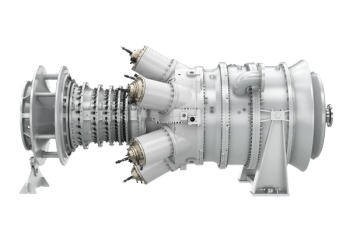
Brun: A gas turbine is an interesting beast, as it has a compressor, turbine, and combustor within. When you view the compressor from an overall thermodynamic perspective, it uses approximately two-thirds of the power generated by the turbine and has a proportionally larger impact on the degradation of a gas turbine. If you have fouling or erosion on the leading or trailing edges of your blades, it’ll have an immediate performance impact as it requires the turbine to produce more power.