
Siemens Energy's Gas Services orders surged 62% to a record as the company joined GE Vernova and Baker Hughes in reporting a record turbomachinery quarter.
The company is evaluating Saudi Arabia as a potential strategic base for its hydrogen compressor business, with large-scale centrifugal models under development in the region.
Kawasaki Heavy Industries (KHI) signed a memorandum of understanding (MOU) with
The former MOU will gradually strengthen local cooperation in preparation for an anticipated shift to a hydrogen-based energy economy in Saudi Arabia. The current agreement forms a collaborative framework with a local partner to accelerate business growth in the Middle Eastern market, with future partnership opportunities in the field of centrifugal hydrogen compressors.
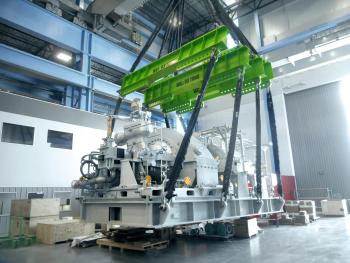
In recent years, there’s been a growing trend of increasing global electricity demand due to the spread of AI and data center infrastructure, along with a trend regarding decarbonization and the diversification of energy supplies. Saudi Arabia’s Vision 2030 promotes industrial diversification and invites investment with a stable supply of oil and gas. KHI already supplied centrifugal gas compressors for gas delivery and process applications at oil refineries, aligning with domestic goals.
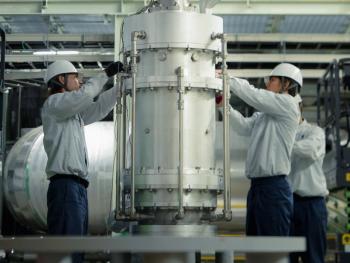
Saudi Arabia and other Middle Eastern countries are promoting decarbonization via national strategies that prioritize the hydrogen value chain. KHI is evaluating Saudi Arabia as a potential strategic base for its hydrogen compressor business, with large-scale centrifugal models currently under development in the region. The company will forge new partnerships with local energy companies in Saudi Arabia.
In early January 2026, KHI and Japan Suiso Energy signed a contract to build the world’s largest
The project aims to demonstrate ship-to-shore loading and unloading of liquefied hydrogen and to conduct ocean-going trials by fiscal year 2030, according to the companies. The newly contracted vessel is intended to serve as a foundation for scaling hydrogen transport to commercial levels in the 2030s, when demand for hydrogen is expected to increase as countries pursue decarbonization strategies.
In December 2025, KHI and Japan Suiso Energy recently hosted a groundbreaking ceremony for the
The Kawasaki LH2 Terminal will support the “Liquefied Hydrogen Supply Chain Commercialization Demonstration” project—an initiative financed by the Green Innovation Fund Project and promoted by the New Energy and Industrial Technology Development Organization. By 2030, the terminal will enter operation alongside a newly constructed liquefied hydrogen carrier while Japan determines the requirements for a commercial, international hydrogen supply chain: performance, safety, durability, reliability, economics, and commercialization.