
Siemens Energy's Gas Services orders surged 62% to a record as the company joined GE Vernova and Baker Hughes in reporting a record turbomachinery quarter.
The company will improve the efficiency of its fuel supply system for a gas turbine, while Kobe Steel develops an intermediate fluid vaporizer to utilize cold energy from liquefied hydrogen.
Kawasaki Heavy Industries (KHI) and Kobe Steel jointly announced the operational start of a next-generation
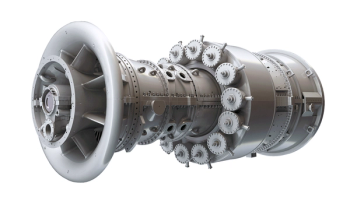
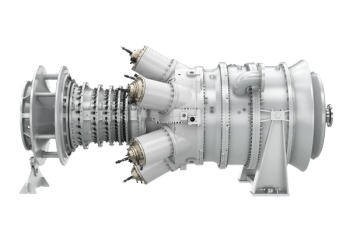
Under this demonstration project, KHI will improve the efficiency of its fuel supply system for a gas turbine generator which leverages a liquefied hydrogen pump to boost pressure, while Kobe Steel develops an IFV that utilizes cold energy derived from liquefied hydrogen. In January, hydrogen fuel was successfully supplied to a wet-type combustion gas turbine and, moving forward, the duo will supply hydrogen to a dry-type combustion gas turbine to validate operating performance under summer conditions and the long-term reliability of liquefied hydrogen pumps.
Hydrogen supplied to the power generating facilities must be pressurized, and boosting the pressure of gaseous hydrogen via conventional supply systems requires high compression force. Using liquefied hydrogen pumps in the supply system eliminates the need for high compression force, improving the energy efficiency of the overall generating system. The cold energy generated by IFV vaporization can be recovered and used for various applications, such as cooling gas turbine intake air, operating refrigerators and freezers, cooling data centers, and air conditioning for commercial and industrial use.
Also, the system is scalable to large-capacity liquefied hydrogen power generation, which prioritizes the future social implementation of hydrogen cogeneration systems at industrial complexes, factories, communities, and other settings. KHI and Kobe Steel are working on the NEDO subsidized project to systemize the design and operational know-how of a hydrogen fuel supply system with a liquefied hydrogen pump, IFV, and hydrogen gas turbine.
This project is based on a hydrogen gas turbine generator demonstration facility installed at Kobe Hydrogen Energy Center, Port Island, Japan. The development of an efficient, safe, and easy-to-use supply model aims to establish a liquefied hydrogen supply chain, expanding Japan’s hydrogen usage and its realization of a carbon-neutral society.
In early March 2026, KHI signed a memorandum of understanding (MOU) with
The former MOU will gradually strengthen local cooperation in preparation for an anticipated shift to a hydrogen-based energy economy in Saudi Arabia. The current agreement forms a collaborative framework with a local partner to accelerate business growth in the Middle Eastern market, with future partnership opportunities in the field of centrifugal hydrogen compressors.
In recent years, there’s been a growing trend of increasing global electricity demand due to the spread of AI and data center infrastructure, along with a trend regarding decarbonization and the diversification of energy supplies. Saudi Arabia’s Vision 2030 promotes industrial diversification and invites investment with a stable supply of oil and gas. KHI already supplied centrifugal gas compressors for gas delivery and process applications at oil refineries, aligning with domestic goals.