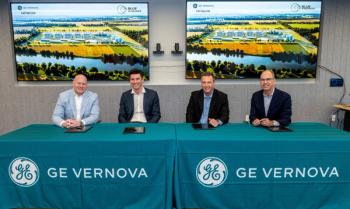

The company raised $8 million to commercialize factory-built supercritical CO₂ systems designed to recover exhaust heat from simple-cycle gas turbines.
Rolls-Royce and Reliance Industries announced plans to jointly develop a sovereign combat engine for India's fifth-generation AMCA stealth fighter program.
Rolls-Royce and Reliance Industries Limited have announced a strategic intent to jointly design, develop, manufacture and deliver a sovereign indigenous combat engine for India's Advanced Medium Combat Aircraft (AMCA) programme, marking one of the most significant developments in South Asia's aerospace propulsion sector in recent memory.¹
The announcement positions the partnership as a potential cornerstone of India's effort to reduce dependence on foreign propulsion systems for its next-generation fighter jet fleet.
The AMCA is India's domestically developed fifth-generation stealth fighter, currently under development by the Aeronautical Development Agency under India's Ministry of Defense. One of the program's most strategically sensitive gaps has long been propulsion—India has historically relied on foreign-supplied engines for its fighter aircraft, including the GE F404 and F414 variants used in its Tejas light combat aircraft.²
Developing an indigenous combat engine capable of powering a fifth-generation platform represents a qualitative leap in engineering complexity. Such engines must deliver high thrust-to-weight ratios, advanced thermal management, full-authority digital engine control (FADEC) integration and long-term supportability — capabilities that have taken established aerospace nations decades to master.
According to the joint announcement, the two companies intend to explore formation of a dedicated Aerospace Gas Turbine Complex in India, described as a center of excellence for power and propulsion technology.¹ The facility would support end-to-end sovereign capability across the full engine lifecycle, encompassing design, development, manufacturing, testing, production, and through-life support.
Rolls-Royce brings more than a century of aero-engine engineering heritage to the arrangement, along with proven combat propulsion expertise spanning platforms including the Eurofighter Typhoon's EJ200 engine. The company reported annual underlying revenue of £20.1 billion and underlying operating profit of £3.46 billion in 2025.¹
Reliance Industries, which is India's largest private sector company with consolidated revenue of approximately $124 billion for fiscal year 2026, contributes domestic manufacturing scale, materials and composites capability, and industrial execution infrastructure.¹
Anant Ambani, Executive Director of Reliance Industries, framed the initiative in terms of national strategic autonomy. "Our intent with Rolls-Royce is to combine their world-leading expertise in advanced propulsion with Reliance's technology, manufacturing, scale and execution capabilities to build an indigenous aero-engine ecosystem in India," Ambani said in a prepared statement.¹
Rolls-Royce CEO Tufan Erginbilgiç emphasized the industrial partnership dimension: "This marks a major milestone towards building a robust, self-reliant aerospace ecosystem in the country."¹
Both statements explicitly tied the initiative to Indian Prime Minister Narendra Modi's Atmanirbhar Bharat — or "self-reliant India" — policy framework, which prioritizes technology indigenization across the defense industrial base.
For turbomachinery professionals, the partnership signals a meaningful expansion of the global combat propulsion supply chain into India. The formation of a dedicated gas turbine complex would require deep competencies in hot-section manufacturing, superalloy processing, advanced cooling technology and precision rotating component production, which are areas where India's industrial base has historically had limited presence.
The announcement also opens potential downstream opportunities. According to the release, the alliance will explore "wider collaborations across defence, civil aerospace, and new power and propulsion systems" — suggesting the complex could eventually address commercial aviation MRO, power generation turbines, or naval propulsion applications.¹
The partnership remains at the strategic intent stage, with formal agreements, program structure and Indian government approvals still to be confirmed. However, given the scale of both organizations and the political visibility of the AMCA program, the initiative is being closely watched across the global aerospace propulsion community.
2.