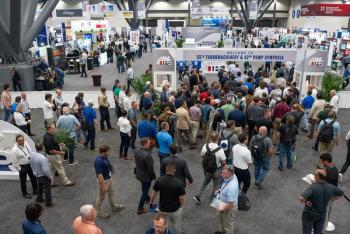
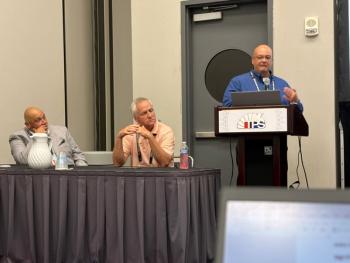
At the 2026 Turbomachinery and Pump Symposia, John Crane’s Brian Kalfrin explained why volatile natural gas liquids demand custom-engineered seals, from face material selection to installation and flush rates.
Aging reciprocating compressors carry real costs in wasted power, gas leakage, and cascading failures. Condition assessment and targeted intervention can extend service life without unnecessary capital spend.
Across the global gas compression industry, operators are under increasing pressure to improve efficiency, control operating costs and maintain high levels of equipment availability. Rising energy costs, tighter environmental requirements and demanding production targets leave little room for unplanned disruption. At the same time, many facilities continue to rely on reciprocating compressors that have been operating for 10 or 20 years, or longer.
These machines are designed for a long service life and many continue to provide reliable operation well beyond their original commissioning date. However, this longevity does not mean that their performance remains unchanged. As compressors accumulate operating hours, wear affects internal components and performance can gradually move away from original design parameters. Efficiency declines, leakage can increase and maintenance requirements become more demanding.
For operators, the prime challenges are maintaining reliability, efficiency, safety and sustainability while controlling lifecycle costs and determining where intervention will deliver the greatest benefit.
Compressor deterioration is generally progressive rather than sudden. Internal components are exposed to continuous thermal cycling, pressure fluctuations, vibration and mechanical loading. Over time, piston rings and rider bands wear, valves deteriorate, sealing surfaces become less effective and internal clearances can increase.
These changes affect the compressor's ability to deliver gas efficiently. As clearances increase and sealing performance declines, the machine may require more power to achieve the same output.
Burckhardt Compression's operational experience indicates that aging reciprocating compressors can consume between 10% and 30% more power than when operating close to their original design condition, depending on the application and degree of deterioration. For industries that typically operate around the clock, such as refining, petrochemicals, industrial gas production and LNG infrastructure, additional energy consumption can become a significant cost over time.
Therefore, compressor performance needs to be considered alongside maintenance expenditure. A machine may continue to operate without an obvious mechanical issue while gradually becoming more expensive to run. The cost of additional energy consumption over several years can be an important factor when deciding whether refurbishment or modernization is justified.
Leakage represents another important source of performance loss. Valves, packing systems, seals and associated components all have to maintain containment under demanding operating conditions. As these components wear, gas can escape, reducing efficiency and increasing the workload placed on the compressor.
According to Burckhardt Compression, unmanaged leakage rates in severely degraded systems can exceed 50%, although actual leakage depends on equipment condition, application and operating circumstances.
However, the consequences extend beyond lost gas. Leakage can increase energy consumption and emissions and, where hazardous or flammable gases are involved, create additional safety risks. Effective containment is therefore both an efficiency and an operational consideration.
Aging compressors can also require progressively more maintenance as components approach the end of their useful service life. Recurring repairs, replacement parts and emergency interventions can increase costs while placing additional demands on maintenance personnel.
A key technical risk is that a seemingly minor failure event can propagate through the system, creating secondary failure modes and leading to more significant operational, reliability or safety consequences. A deteriorating valve, for example, can affect operating temperatures, which may then influence lubrication quality, accelerating wear in other components. Increasing wear can lead to vibration, misalignment and further mechanical deterioration.
If these problems remain unresolved, the eventual failure can involve major components such as cylinders, pistons, bearings or the crankshaft. What might initially have been a relatively straightforward maintenance intervention can consequently become a much more extensive repair.
For plants where compressor availability is closely linked to production, the cost of such failures can extend beyond the equipment itself. Unplanned shutdowns can interrupt production, disrupt supply schedules and require emergency maintenance. This makes the timing and scope of intervention an important part of managing aging assets.
A structured lifecycle strategy starts with establishing the actual condition of the machine. Routine maintenance schedules and visual inspections remain important, but they may not reveal gradual performance deterioration.
A more comprehensive assessment can examine vibration, temperature, pressure performance, leakage, valve condition, lubrication and mechanical integrity. This provides operators with information that can be used to identify compressors requiring closer attention and to distinguish routine wear from more significant developing problems.
For operators managing several compressors, such assessments can also identify underperforming assets within a fleet. A compressor may remain available for production while consuming excessive energy or experiencing early signs of deterioration. Identifying these “bad actors” allows maintenance resources to be prioritized according to equipment condition and operational importance.
Taken together, this condition data and fleet prioritization can then be used to make decisions about whether a machine requires routine maintenance, a more comprehensive overhaul or targeted modernization.
An overhaul provides an opportunity to address several sources of performance deterioration at the same time. Depending on the condition of the equipment, work can include re-machining critical surfaces, replacing piston rings and rider bands, rebuilding valves, restoring cylinder alignment, renewing sealing components and addressing lubrication systems.
The objective is to restore the mechanical condition of the compressor rather than simply replace components on a like-for-like basis. Correcting clearances, sealing and alignment can help recover lost performance while reducing the likelihood of recurring problems.
Modernization can provide another option where the fundamental compressor remains suitable for its application but individual components or technologies have become outdated. Advances in materials and component design can provide opportunities to improve the performance of existing equipment without replacing the complete machine.
Depending on the application, modernization can include redesigned valves, improved piston and packing materials, upgraded cooling systems, revised lubrication concepts and enhanced sealing technologies. These changes can address wear, leakage and reliability while adapting an established compressor to current operating requirements.
This approach is particularly relevant where the capital investment for complete equipment replacement is difficult to justify. However, the decision needs to reflect the condition of the compressor and its anticipated future duty rather than simply its age.
Digital monitoring is increasingly providing another means of managing aging compressor fleets. Traditional maintenance strategies based on fixed intervals can result in components being replaced unnecessarily, while developing faults may occur between inspections.
Continuous monitoring of parameters such as vibration, temperature, pressure, flow and lubrication condition can provide a more detailed picture of equipment behavior. Changes in operating trends can help identify developing problems before they result in a failure.
For maintenance teams, earlier identification creates the opportunity to plan interventions around scheduled outages, order replacement parts in advance and allocate resources where they are most needed. It can also help highlight operating conditions associated with excessive energy consumption or accelerated component wear.
Condition monitoring does not eliminate the need for physical inspection or planned maintenance. Rather, it provides additional information that can support more targeted decisions, particularly as equipment becomes older and the consequences of failure increase.
The decision to overhaul, modernize or replace an aging compressor cannot be based on age alone. The condition of the machine, its operating duty, maintenance history, remaining service requirements and the cost of downtime all need to be considered.
Where the existing compressor remains mechanically suitable, targeted refurbishment or modernization may provide an alternative means to extend its useful life. For example, in a published case study, Burckhardt Compression Canada completed a zero-hour overhaul of a 60-year-old Clark HLA-6 compressor for Sherritt International Corporation, a nickel and cobalt producer, after the original equipment manufacturer had discontinued support for the unit. The project rebuilt the compressor to newly established specifications, in the absence of most historical documentation, and improved compressor availability from 62% to 88%. Other overhaul and modernization programs have similarly addressed reliability problems, with redesigned components and upgraded materials used to improve performance and extend maintenance intervals.
The appropriate decision is therefore ultimately based on lifecycle economics rather than the immediate cost of a repair. Energy consumption, maintenance requirements, availability, downtime and expected remaining service life all contribute to the overall picture.
Aging reciprocating compressors are not automatically liabilities. The greater risk comes from allowing gradual performance deterioration to continue unchecked until it develops into a major reliability, efficiency or safety problem.
A proactive lifecycle strategy provides operators with a means of identifying those changes and responding appropriately. Condition assessment can reveal where performance is being lost, overhaul can restore mechanical condition, modernization can introduce improved components, and digital monitoring can provide greater visibility between planned interventions.
Burckhardt Compression's experience indicates that targeted interventions can improve availability, reduce vibration and maintenance requirements as well as address recurring operational problems, although results will depend on the individual compressor and operating conditions.
Ultimately, the question for operators is how to manage the remaining service life of the compressor effectively. Where the underlying machine remains suitable for its duty, informed maintenance and selective modernization can provide a means of retaining existing infrastructure while controlling energy use, reliability risks and lifecycle costs.
As efficiency, uptime and environmental performance become increasingly important, understanding the condition and changing performance of aging compression equipment will remain a central part of effective asset management.