

Feature|Videos|October 21, 2026
Why Compressor Criticality Isn't Always Obvious Until It Fails
Key Takeaways
- Understand why a compressor's criticality depends on where it sits in the process, not on the equipment alone.
- Learn the three factors used to assess how critical a compressor really is.
Rotating equipment specialist Wael Al Mandarawi explains why a centrifugal compressor's true criticality has little to do with the machine itself.
Advertisement
Episodes in this series
Sponsored by FS-Elliott
Centrifugal compressors sit at the core of operations across power generation, process, and industrial facilities, but how critical any single unit is often isn't obvious until something goes wrong. In this episode, Wael Al Mandarawi explains that criticality depends less on the compressor itself and more on the consequence of losing it, whether it directly supports production, instrumentation, or another essential utility, and whether redundancy exists to absorb a trip.
Al Mandarawi breaks criticality down into three perspectives: production impact, safety and environmental consequence, and recovery time from failure. He argues that life cycle planning shouldn't wait for a compressor to fail and that assessment should happen ahead of time and directly drive maintenance strategy selection.
For reliability engineers and plant managers building or refining a maintenance strategy, this episode offers a framework for evaluating criticality before it's tested by an unplanned outage.
Advertisement
Related to this article

EnergyLink International's acquisition of DC Power expands its installation and retrofit capabilities, signaling continued consolidation across the energy...
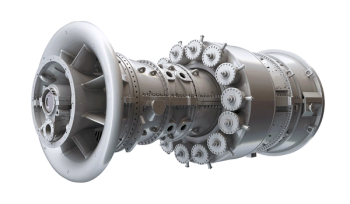
GE Vernova will supply a 9E gas turbine and related equipment for the 372 MW Songon combined-cycle plant near Abidjan, set for commercial operation in 2029.

SoftInWay's AxSTREAM AI platform introduces pre-trained foundation models for turbomachinery design, promising faster feasibility assessment with under 3%...

The memorandum pairs Ansaldo's gas turbines and generators with Hitachi Energy's grid equipment for both 50 Hz and 60 Hz markets.
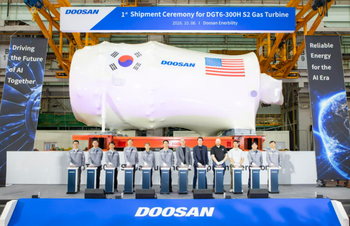
The DGT6-300H shipment is the Korean OEM's first gas turbine export to the U.S., where it says it holds 12 turbine contracts.
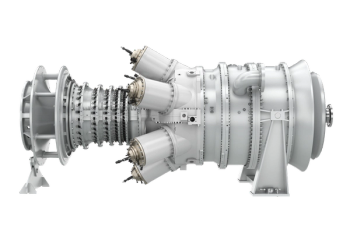
Siemens Energy will supply 119 SGT-400 gas turbine cores, about 1.7 GW, for Dynamis' DT18 hypermobile power packages, with deliveries starting in 2027.

The company raised $8 million to commercialize factory-built supercritical CO₂ systems designed to recover exhaust heat from simple-cycle gas turbines.

At the 2026 Turbomachinery and Pump Symposia, Engro Fertilizers’ Muhammad Uzair Javed explained how his team traced persistent high vibration to train misalignment, then moved a 100-ton turbine skid to cut vibration in half.
Advertisement
Advertisement
Trending on Turbomachinery Magazine
1
GE Vernova's 9E Gas Turbine to Power 372 MW Songon Plant in Côte d'Ivoire
2
EnergyLink International Acquires DC Power to Expand Retrofit and Installation Reach
3
Hitachi Energy, Ansaldo Energia Sign MOU on Integrated Turbine and Grid Solutions for Data Centers
4
Speed to Power: Meeting Surging Grid Demand With Fast, Flexible On-Demand Generation
5